Using Coasters as Part of an Omnichannel Marketing Strategy
 People do not buy goods and services. They buy experiences. - Joseph Pine, Co-author of The Experience Economy
The New Age of Marketing: Bridging Offline and Online Worlds
Marketing has changed dramatically over the past decade, but one thing remains true: people still respond to tangible experiences. While digital marketing continues to dominate budgets, offline marketing strategies have found new life in an increasingly connected world. The smartest brands now blend both channels to form seamless customer journeys that combine physical and digital touchpoints.
These blended campaigns fall under a growing category known as offline to online marketing ideas. This approach uses real-world materials and events to drive digital interaction. For example, when a customer scans a printed QR code or visits a landing page after receiving a promotional coaster, the brand successfully bridges offline and online engagement. It creates a loop where each channel strengthens the other.
Businesses that once relied solely on online marketing now realize that offline marketing efforts can build stronger emotional connections. Real-world touchpoints leave lasting impressions that digital ads cannot match. The result is a balanced marketing strategy that speaks to customers both on screen and in person.
How Custom Coasters Become High-Impact Marketing Tools
Why Coasters?
Among the best offline marketing ideas available, coasters stand out as an inexpensive, high-visibility tool with surprising impact. They sit directly in front of customers for extended periods, and unlike flyers or posters, coasters invite interaction. People hold them, notice their design, and often take them home. This simple, tactile interaction drives stronger brand recall and engagement.
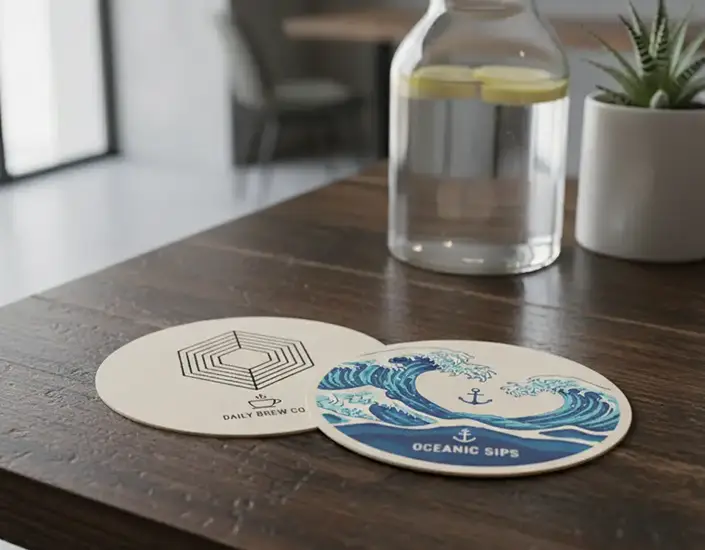
When used strategically, coasters become miniature billboards that support your marketing strategy. They are perfect for reinforcing branding, promoting events, or driving digital traffic through QR codes or hashtags. Because they are affordable to print in bulk, they make sense for small businesses and large campaigns alike. Few offline marketing strategies deliver so much exposure for such a low cost per impression.
QR Codes, Hashtags & Social Handles on Coasters
Modern coasters are no longer just paper discs with logos. They are versatile marketing tools that link directly to your digital presence. By adding QR codes, hashtags, or social media handles, businesses can easily connect offline and online audiences.
For example, a brewery might print a QR code that links to an online store or rewards program. A restaurant could include a hashtag that encourages customers to share photos of their drinks on social media. A corporate event might use coasters that direct attendees to a post-event survey or highlight a new campaign video.
These offline to online marketing ideas are simple to implement and trackable. With dynamic QR codes, businesses can update links at any time without reprinting coasters, keeping campaigns flexible. This type of integration bridges the gap between physical engagement and digital data collection, making coasters a powerful offline marketing tool in a digital world.
Branded Coasters at Local Events
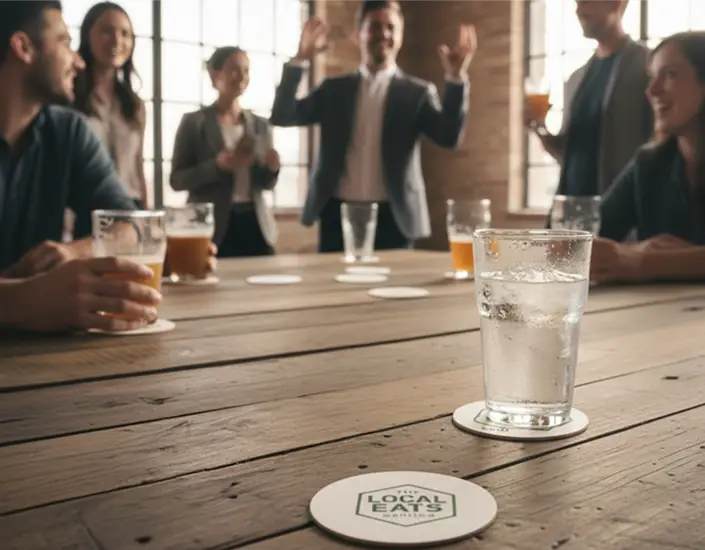
Few marketing methods create stronger community connections than event-based marketing. Coasters make excellent conversation starters and branded souvenirs at local events such as festivals, trade shows, and corporate gatherings. Whether handed out at a booth or placed on every table, they subtly promote your brand in a friendly, approachable way.
For example, distributing event coasters during a charity fundraiser or local market helps increase visibility among attendees. Each coaster that travels home becomes a small advertisement for your brand within the local community. These simple items can generate word-of-mouth awareness long after the event has ended.
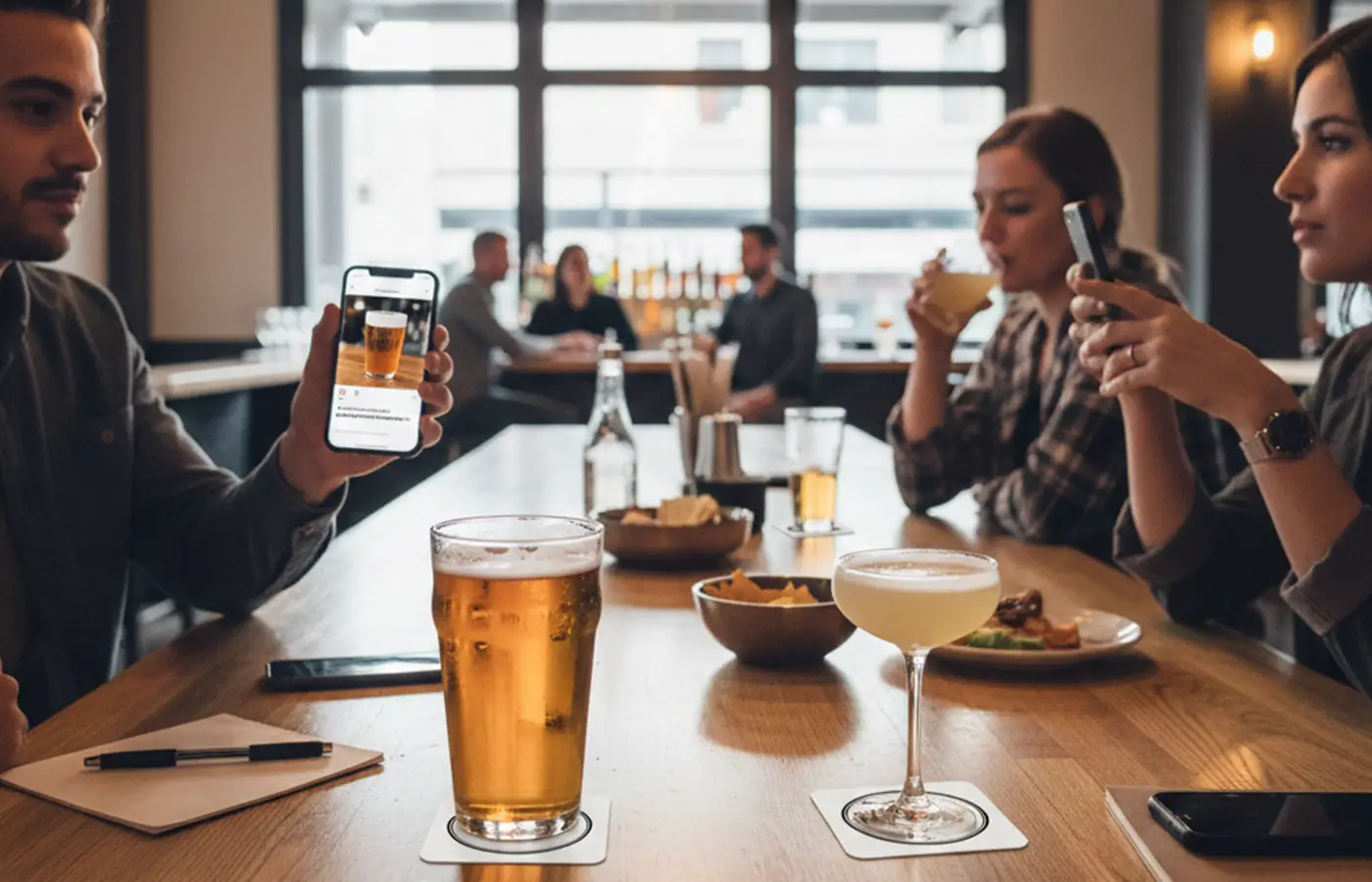
Coasters are particularly effective because they fit naturally into event settings. Unlike flyers or coupons that people discard, coasters serve a purpose. They protect surfaces, spark conversations, and often get photographed alongside drinks. This makes them one of the best offline marketing ideas for engaging a live audience and amplifying social sharing.
Practical Ways to Combine Offline and Online Marketing Using Coasters
The versatility of coasters opens endless possibilities for marketers who want to merge their physical and digital efforts. Below are practical, real-world examples of how to use coasters as part of your omnichannel marketing strategy.
Drive Website Visits with QR-Enabled Coasters
If your goal is to increase web traffic, coasters are an effective and low-cost solution. By printing a QR code that links directly to a landing page, businesses can guide potential customers online with a single scan. The result is a measurable bridge between offline marketing and digital marketing performance.
For example, a coffee shop might feature a coaster that says, "Scan for our loyalty program". A brewery might link to a new product launch page. A hotel might send guests to a feedback form or booking portal. These small interactions turn casual moments into meaningful digital conversions.
Adding trackable URLs or UTM codes allows marketing teams to analyze results from these offline marketing tactics. You can see which designs produce the most engagement, helping refine future marketing efforts. With such clear performance insights, coasters prove that print-based materials can play a modern role in data-driven marketing campaigns.
Including visual cues like a short callout or social icon helps encourage scans. When people know exactly what they will get (a coupon, free download, or entry into a contest, etc.) they are far more likely to participate. This creates a seamless and rewarding customer experience from offline to online.
Capture Leads with Coaster-Led Giveaways
Lead generation is another area where coasters excel. A well-designed campaign can turn every coaster into an invitation to connect. For example, you could run a contest where participants scan a QR code or visit a website to enter their email for a prize. This simple method helps you build a valuable contact list.
These campaigns work particularly well for local businesses that want to attract nearby audiences. Restaurants, breweries, gyms, and salons can all distribute coasters that link to sign-up forms or promotional landing pages. This helps convert casual visitors into potential customers.
To add more impact, pair the campaign with limited-time offers or seasonal deals. When customers feel there is a time-sensitive reward for participating, engagement increases significantly. Coasters also make it easy to track which designs perform best, since each can have its own QR code or unique URL.
Promote Seasonal Campaigns or Limited-Time Offers
Coasters are ideal for highlighting time-sensitive campaigns. Whether you are promoting a new product launch, a holiday special, or an exclusive event, these small print pieces can spark big action. Seasonal messages printed on coasters work as subtle reminders that stay in front of customers longer than digital ads, especially when displayed in restaurants, hotels, or bars.
Imagine a coffee shop releasing a limited winter drink and using coasters to advertise it. Each coaster could feature a photo of the new item and a short message inviting customers to scan for details or redeem a digital coupon. Because the coaster sits directly in front of the customer, it naturally draws attention. For companies with active marketing efforts, coasters can turn simple table settings into brand-building opportunities that lead to measurable engagement.
This approach fits perfectly into the world of offline to online marketing ideas. It connects the immediacy of physical promotion with the flexibility of digital updates. As seasons change, businesses can easily switch coaster designs to match new themes, ensuring that the message always feels fresh.
Who Should Use Coasters in Their Offline Marketing Strategy?
Small Businesses and Local Retailers
For small businesses and local retailers, every marketing dollar counts. Coasters offer an affordable and creative way to stay visible. Placing branded coasters in partner locations, cafes, or public spaces keeps your business top of mind. Because customers often see and handle these items multiple times, they deliver excellent value and long-term recognition.
Small businesses can use coasters to promote loyalty programs, new product lines, or social media pages. These offline marketing strategies work well in community-based environments where personal connections matter most. Local coffee shops, independent breweries, and boutique stores often benefit from the personal touch of physical materials. By combining coasters with QR codes or discount offers, businesses can turn casual interactions into repeat visits.
This combination of tactile design and digital access shows how even the smallest marketing ideas can lead to big results. It is an effective approach for businesses that want to stand out in their local community.
Hospitality, Bars and Event Planners
Few industries benefit more from coaster marketing than hospitality. Bars, restaurants, and event venues are natural environments for coasters. They serve both a practical purpose and a promotional one, offering endless chances for branding and engagement.
Hospitality businesses can use drink coasters to promote seasonal drinks, new menu items, or upcoming events. Event planners can customize coasters to feature sponsor logos, QR codes for feedback forms, or hashtags to encourage online sharing. Because these venues often host large numbers of guests, coasters quickly multiply impressions at very low cost.
This strategy strengthens the connection between offline marketing and customer experience. Every coaster handed out represents a small piece of your brand's personality. It helps create memorable moments that customers associate with quality and attention to detail.
Sustainable Brands and B-Corps
Sustainability-minded companies are finding creative ways to merge environmental responsibility with effective marketing. Using pulpboard or recycled coasters demonstrates a brand's commitment to eco-friendly materials while still delivering high-impact advertising. This appeals to both new and existing customers who value authenticity and conscious business practices.
For sustainable brands and B-Corps, coasters can also highlight green initiatives, donation programs, or partnerships with environmental groups. QR codes printed on the coasters can lead to pages that explain your sustainability goals, certifications, or recycling tips. This adds transparency to your message.
These approaches fit perfectly into offline to online marketing ideas because they make it easy for people to act immediately after interacting with your brand. When sustainability messaging meets engaging design, it creates emotional connections that encourage long-term loyalty.
Coasters vs. Other Offline Marketing Tactics
When comparing coasters to other offline marketing tactics, the advantages become clear. Flyers and brochures are often thrown away quickly. Posters and signs are seen but rarely held. Promotional merchandise such as pens or magnets can work, but they are typically more expensive to produce. Coasters, on the other hand, are both functional and affordable.
Unlike most printed materials, coasters are interactive. They invite touch and naturally encourage repeat impressions. Customers might use them throughout the night or even take them home, extending exposure for days or weeks. This kind of sustained visibility is difficult to achieve through standard advertising formats.
Coasters also blend well with digital marketing efforts. They can carry scannable QR codes, trackable URLs, or social prompts that convert real-world impressions into online engagement. This makes them measurable and easy to integrate into omnichannel campaigns.
When comparing the return on investment, coasters consistently outperform many short-term advertising channels. They provide continuous exposure at a fraction of the cost. For marketers seeking creative yet cost-effective tools, coasters represent one of the smartest investments in offline marketing today.
Final Thoughts: Why Coasters Belong in Your Marketing Mix
In a world dominated by digital screens, physical marketing still holds power. Coasters are proof that tangible materials can create meaningful, memorable experiences that support broader brand objectives. They give businesses a way to engage the senses while driving measurable results online.
When integrated thoughtfully, coasters can strengthen your marketing strategy, boost engagement, and enhance customer loyalty. Whether used for local businesses, large-scale events, or sustainable campaigns, they work as the perfect connector between physical experiences and digital interactions.
By using offline to online marketing ideas, companies can build campaigns that are not only creative but also effective. Each coaster placed on a table, handed out at an event, or shipped with a product becomes a bridge between your real-world presence and your online identity.
Your brand does not need a massive budget to make a lasting impact. All it takes is a smart idea, quality design, and the willingness to connect with customers in creative ways. With the right message and materials, coasters can become the secret ingredient that transforms your marketing efforts into long-term success.
Share: