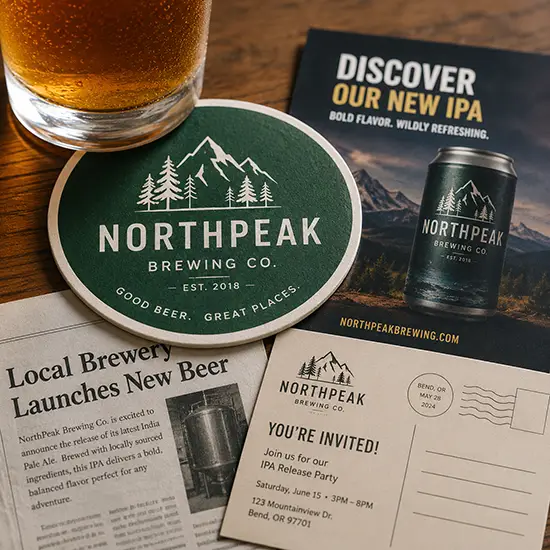
3D Printed Promotional Products vs Pulpboard: What Works Best for Beer Promotions?
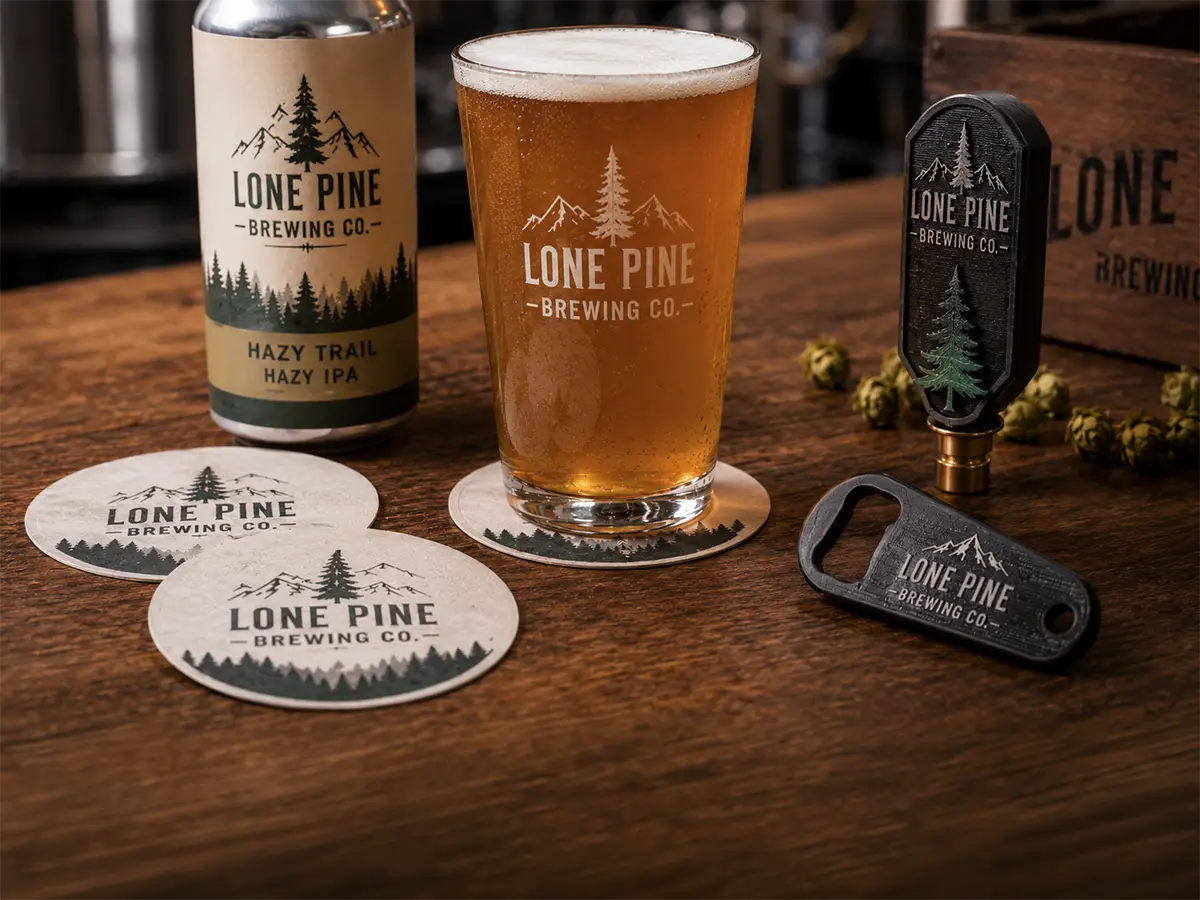
 The best promotional products are the ones people actually use. - Coaster Factory
Beer brands compete in a crowded environment. Tap handles rotate. Seasonal releases come and go. Shelf space is tight. If you want your brand remembered, your promotional materials need to do more than look good for a moment. They need to create a lasting impression in the places where people are already engaging with your product.
That raises an important question for breweries, beverage distributors, hospitality groups, and event planners. Should you invest in 3d printed promotional products for eye catching novelty items, or stick with traditional pulpboard coasters that have been a staple of beer promotions for decades?
Both options have value. The real answer depends on scale, budget, sustainability goals, and how you want customers to interact with your brand. Let's take a closer look.
The Rise of 3D Printed Promotional Products
Over the last decade, 3D printing has moved from industrial prototyping into mainstream marketing. Businesses are experimenting with 3d printed promotional products to stand out at trade shows, tasting events, and product launches.
The appeal is obvious. With 3D printing, you can create custom shapes that would be difficult or expensive to produce using traditional manufacturing. Small batches are easier to produce, and designs can be adjusted quickly without retooling large equipment.
Why 3D Printing Has Gained Attention in Beer Marketing
Beer marketing thrives on creativity. Limited releases, collaborations, and seasonal campaigns often call for something unexpected. This is where 3d printed promotional products can shine.
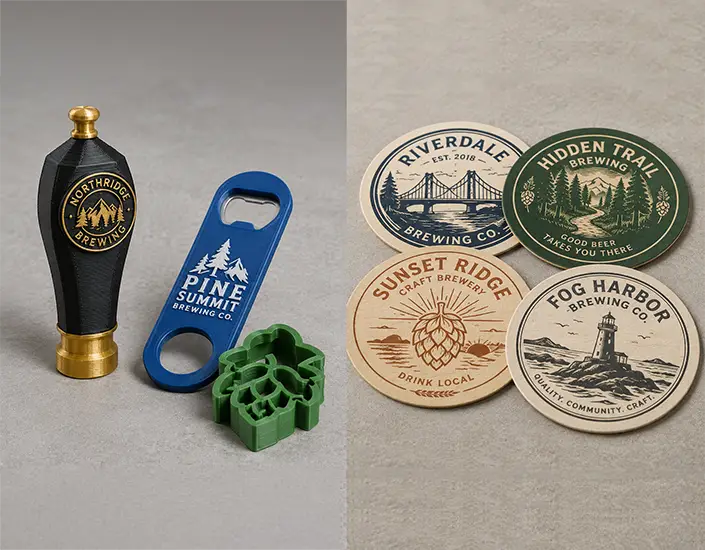
A brewery launching a pumpkin ale might create 3d printed bottle openers shaped like miniature pumpkins. A craft brand with a playful personality could distribute 3d printed cookie cutters shaped like its logo for holiday promotions. These ideas are conversation starters.
At trade shows, unusual 3d printed giveaways can draw attention to a booth. When attendees walk the floor, they are bombarded with standard promotional items like pens, stickers, and tote bags. A tactile, uniquely shaped object stands out in a sea of sameness.
There is also flexibility in design. Since these products are built layer by layer, brands can experiment with intricate details, textured surfaces, and unusual forms. That level of control allows marketing teams to push creative boundaries.
Common Examples of 3D Printed Giveaways
In the beverage space, the most common 3d printed promotional products include:
- Custom bottle openers
- Branded cookie cutters
- Small figurines tied to mascots
- Mini tap handle replicas
- Decorative bar accessories
Many of these are produced in various materials, typically plastic-based filaments. Some brands are exploring biodegradable options, but most mass-market 3d printed items still rely on petroleum-based materials.
These products can be eye catching and memorable. However, they are typically used for limited runs, influencer kits, VIP events, or small audience promotions. Scaling them into tens of thousands of units often increases cost significantly.
That brings us to the other side of the equation.
The Pulpboard Coaster Advantage
While 3D printing feels modern, pulpboard coasters remain one of the most effective tools in beer marketing. They are not flashy for the sake of being flashy. They work because they are practical, visible, and used repeatedly during the drinking experience.
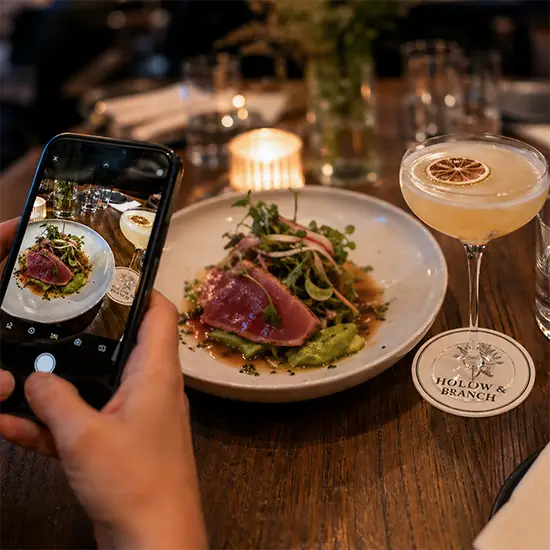
Unlike novelty items that might end up in a drawer, a coaster sits directly beneath the product it promotes. Those positioning matters.
Why Pulpboard Coasters Work So Well for Beer Promotions
Beer is consumed in social settings. Bars, restaurants, breweries, patios, festivals, and private events all share one common detail. Drinks need a surface.
High-quality pulpboard drink coasters are absorbent, durable, and designed specifically for beverage environments. When placed under a pint glass or bottle, they stay in front of the customer from the first sip to the last.
That repeated exposure builds brand recognition naturally. It does not interrupt the experience. It enhances it.
For breweries and hospitality groups, coasters are not just background accessories. They are silent brand ambassadors. A well-designed coaster can reinforce a logo, highlight a seasonal release, promote a limited-time offer, or even include a QR code for engagement.
If you want to explore a range of professional options, you can view available drink coasters built specifically for high-volume hospitality use.
Cost-Effective and Eco-Friendly Branding
One of the biggest advantages of pulpboard coasters is that they are cost effective at scale. When ordered in bulk, the cost per impression becomes extremely low. A single coaster can be seen by multiple customers over the course of a day.
From a sustainability standpoint, pulpboard also offers advantages. Many coasters are produced using recycled fibers and printed with environmentally responsible inks. For brands that prioritize eco-conscious messaging, this alignment supports the broader marketing strategy.
Unlike many 3d printed promotional products, which rely heavily on plastic, pulpboard is biodegradable. That matters to sustainability-focused buyers who are increasingly evaluating the lifecycle of promotional products.
For beer brands that want to communicate environmental responsibility, the material itself becomes part of the story.
The Design Versatility of Pulpboard
Some marketers assume that pulpboard limits creativity. In reality, the opposite is true.
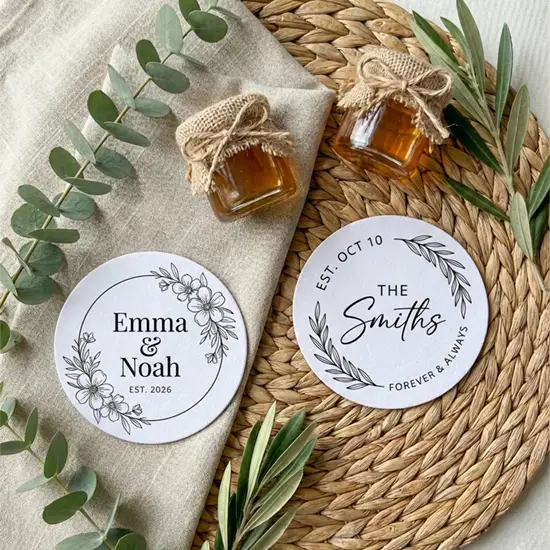
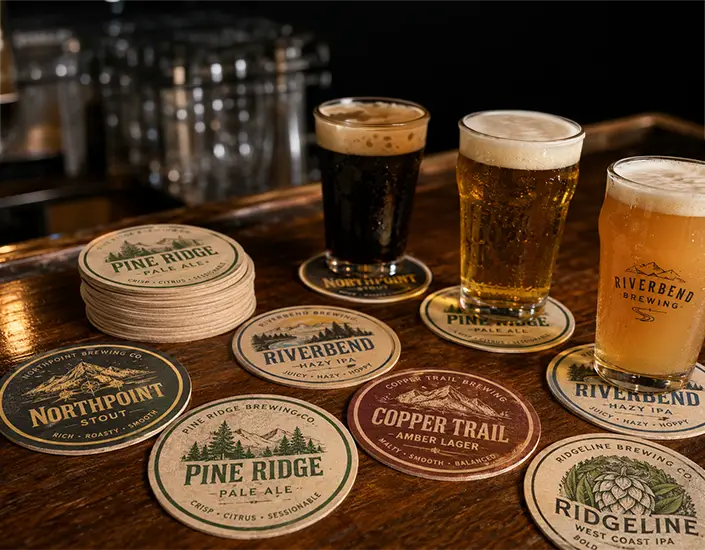
Modern printing technology allows for vibrant colors, detailed artwork, metallic accents, embossing, and custom shapes. You are not limited to basic circles or squares. Custom die cuts, unique designs, and double-sided printing open up creative possibilities.
You can showcase bold graphics, incorporate storytelling elements, or even design collectible series that encourage customers to keep multiple versions.
If you want inspiration, explore available coaster designs that demonstrate how far print capabilities have evolved.
How Pulpboard Fits Hospitality and Event Environments
Hospitality settings demand practicality. Coasters need to absorb condensation, protect surfaces, and maintain their shape throughout service.
Pulpboard excels in this environment because it was designed for it. Unlike rigid plastic items that serve a single novelty purpose, coasters integrate directly into the operational flow of bars and restaurants.
At trade shows, breweries often distribute coasters as part of tasting experiences. At festivals, they help manage spills and branding at the same time. In taprooms, they reinforce identity every day without additional effort from staff.
This blend of function and marketing is what makes pulpboard so powerful. It is not just promotional. It is useful.
Comparing 3D Printed and Pulpboard Promotional Items
Choosing between 3d printed promotional products and pulpboard coasters is not about which option is trendier. It is about matching the tool to the job. Each serves a different role within beer promotions, and understanding those differences helps avoid wasted budget.
Cost and Production Time
Cost is often the deciding factor for marketing teams.
3D printing excels in short runs. If you need a few hundred items for a launch event or VIP tasting, production can move quickly. There is no need for molds or long setup times. Design tweaks can be made without restarting the process.
However, once quantities increase, costs rise fast. Printing thousands of identical items layer by layer takes time, labor, and machine capacity. This makes 3d printed promotional products less practical for wide distribution.
Pulpboard coasters are designed for scale. Large runs are efficient, consistent, and predictable in pricing. For breweries supplying bars, restaurants, or distributors, that scalability matters. Production timelines are reliable, and reorders are straightforward.
Sustainability and Materials
Material choice plays a growing role in promotional decisions.
Most 3D printed items are produced using plastic filaments. While there are experimental eco-friendly options, they are not yet standard for large campaigns. Disposal and long-term environmental impact are valid concerns, especially for sustainability-focused buyers.
Pulpboard coasters, by contrast, are typically made from recycled fibers and printed with responsible inks. They break down naturally after use and align well with environmentally conscious branding.
When comparing various materials, pulpboard offers a clear advantage for brands that want sustainability to be more than a marketing claim.
Customization and Brand Fit
Customization means different things depending on the product.
With 3D printing, customization often refers to shape. You can create detailed bottle openers, cookie cutters, or sculptural objects that feel playful and unexpected. These work best when novelty supports the brand personality.
Pulpboard customization focuses on visual storytelling. Color, typography, illustration, messaging, and finish all work together to communicate brand identity. For beer brands that care about aesthetics and consistency across touchpoints, this flexibility is powerful.
A well-designed coaster reinforces the same look customers see on cans, tap handles, menus, and signage. That cohesion strengthens brand recall.
ROI and Customer Retention
Return on investment is not just about cost per unit. It is about how often the item is seen and used.
A novelty item may be memorable once. A coaster is seen repeatedly throughout a drinking session. It sits directly under the product and remains visible without requiring effort from the customer.
That repeated exposure builds familiarity. Familiarity builds trust. Trust drives repeat purchases.
For brands focused on long-term customer retention, pulpboard coasters often deliver stronger ROI than one-off giveaways.
How to Integrate Both Into Your Marketing Strategy
This does not have to be an either-or decision. Many successful beer brands use both formats strategically.
Using 3D Printing for Limited Edition Giveaways
3d printed promotional products work best when scarcity is part of the appeal.
Limited edition bottle openers, small-run cookie cutters, or branded accessories can enhance special releases or collaborations. These items feel exclusive and are ideal for influencer kits, media drops, or VIP events.
Because quantities are controlled, costs remain manageable, and the novelty factor stays intact.
When Bottle Openers, Cookie Cutters, and Small Tools Make Sense
Not every promotion needs mass reach. Sometimes the goal is to spark conversation.
Bottle openers shaped like hops, mascots, or logos work well in tasting rooms or private events. Cookie cutters are surprisingly effective during holiday campaigns when beer brands want to connect with home gatherings.
These items should support the story, not carry the entire campaign.
Using Pulpboard Coasters for Mass Outreach
When the goal is visibility, pulpboard wins.
Bars, breweries, festivals, and trade shows all benefit from coasters that can be distributed widely. They are practical, familiar, and expected in beer environments.
At trade shows, coasters are easy to pack, hand out, and integrate into tasting experiences. They reach more people with less friction than most promotional items.
For brands looking to anchor their marketing strategy in everyday touchpoints, coasters deliver consistent value.
Trade Shows, Taprooms, and Event Distribution
Coasters thrive in environments where beer is consumed socially. Taprooms use them daily. Events rely on them to manage spills. Trade shows use them to support sampling.
In each case, branding is reinforced naturally. No explanation is required.
Blending Innovation and Tradition Without Overcomplicating It
The smartest campaigns keep things simple.
Use 3D printing to surprise. Use pulpboard to reinforce. Let each tool do what it does best without forcing overlap.
The Coaster as a Creative, Cost-Effective Centerpiece
Among all promotional products, coasters occupy a unique position.
They are not novelty items. They are not disposable flyers. They sit at the center of the beer experience.
Why Drink Coasters Outperform Most Promotional Items
A coaster earns its place on the table. It absorbs moisture, protects surfaces, and stays visible. That function gives branding permission to exist without intrusion.
This is why coasters consistently create a lasting impression. They are seen, touched, and associated directly with the product.
For brands seeking dependable exposure, few items outperform coasters.
From Tabletop Branding to Home Decor Value
Some coasters go beyond the bar.
Well-designed sets are often taken home and reused. They become part of home decor in kitchens, home bars, and patios. This extends brand visibility beyond the original point of sale.
When customers choose to keep your coaster, your branding travels with them.
If you are ready to build that kind of presence, start with professional custom coasters designed for real-world use.
Final Thoughts: Choosing What Works for Your Brand
The best promotional tools support your goals, not trends.
3d printed promotional products are excellent for limited runs, creative experiments, and small audiences. They offer novelty and customization in controlled quantities.
Pulpboard coasters excel at scale. They are practical, sustainable, cost effective, and deeply embedded in beer culture.
Questions to Ask Before Choosing
Before committing, ask:
- How many people need to see this?
- Where will it be used?
- How long should it last?
- Does it align with our sustainability values?
Answering these questions clarifies the right mix.
Matching Promotional Products to Scale and Budget
For most beer brands, coasters form the foundation. Other items layer on top.
When promotions are built around function, visibility, and consistency, results follow.
Share: