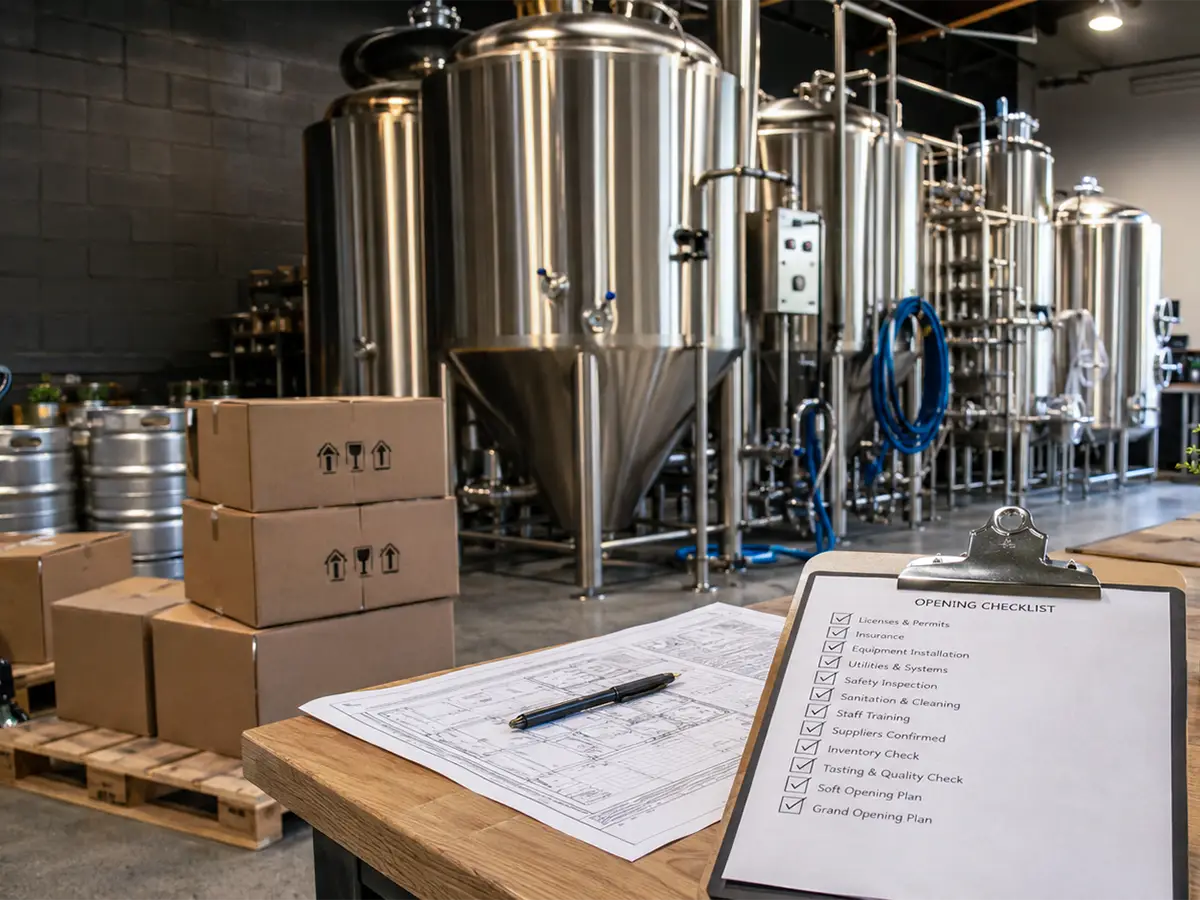
Brewery Opening Checklist: Your Complete Brewery Launch Kit
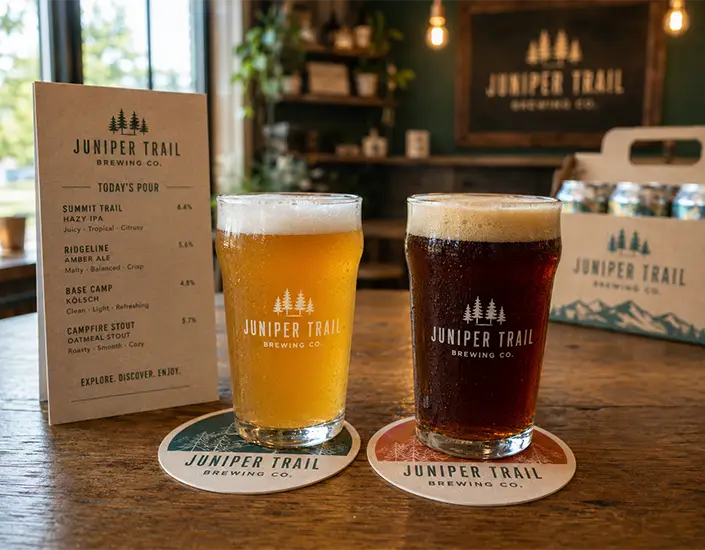
 A great brewery is built one detail at a time, and the coaster is one of the first details customers touch. - Coaster Factory
Opening a brewery is equal parts passion and precision. It is creative, hands-on, and deeply rooted in community, but it is also a serious operational commitment. Whether you are entering the craft beer space as an experienced operator or preparing to open your own brewery for the first time, success depends on preparation.
That preparation starts with a clear brewery opening checklist. Not a vague idea scribbled in a notebook, but a structured roadmap that covers planning, compliance, equipment, branding, and growth. The breweries that thrive are rarely the ones that move fastest. They are the ones that plan properly.
This guide walks you through every major milestone, from business structure to taproom experience, while highlighting the often-overlooked details that shape first impressions and long-term profitability.
Step 1 - Develop a Solid Brewery Business Plan
Every successful launch begins on paper. Before you lease space, purchase equipment, or design labels, you need a brewery business plan that outlines exactly how your operation will function and grow.
A strong business plan defines your target market, production capacity, pricing structure, distribution model, and staffing plan. It should explain whether you are operating as a neighborhood taproom, a production-focused craft brewery, or a hybrid model. Whether you plan to operate as a small taproom or a growing brewing company, your business plan should reflect realistic production and distribution goals. Investors and lenders expect clarity, but even if you are self-funding, a documented strategy protects you from expensive guesswork.
Defining Your Vision in the Craft Beer Industry
The craft beer industry is competitive and constantly evolving. Consumer preferences continue to shift toward local, seasonal, and experience-driven offerings. To stand out, your brewery must offer more than good beer. It needs a clear identity and a reason to exist.
Ask yourself where you fit. Are you positioning as a community gathering space, a destination brewery with event programming, or a production-focused operation with regional reach? For many founders, building an independent brewery means maintaining creative control while growing sustainably. Your answers influence everything from taproom layout to pricing strategy.
When your vision is clear, your brewery opening checklist becomes tailored to your goals instead of generic startup advice.
Financial Planning and Separating Personal and Brewery Expenses
Financial discipline is where many startups struggle. One of the most important early decisions is separating personal and brewery expenses from day one. Dedicated accounts, consistent bookkeeping, and professional accounting software create clarity and reduce risk.
This is not just about compliance. It is about control. As revenue grows, accurate financial data allows you to understand margins, cost of goods, labor ratios, and overhead in real time.
A solid business plan should account for startup costs, break-even timelines, and contingency funds, while also helping you secure brewery funding from lenders or investors. Equipment purchases, leasehold improvements, licensing fees, and insurance add up quickly. Conservative planning allows you to move forward with confidence.
Step 2 - Choose Your Brewery Location and Licenses
Your location shapes both perception and performance. A high-visibility downtown address may increase foot traffic, but it often comes with higher rent and tighter space constraints. Choosing the right brewery location affects visibility, operating costs, and long-term expansion potential. Industrial locations reduce overhead but demand stronger marketing.
Your brewery opening checklist should include zoning verification before any lease is signed. Not all municipalities allow alcohol production or on-site consumption in every commercial zone.
Zoning, Foot Traffic, and Taproom Strategy
If a taproom is part of your model, accessibility matters. Parking availability, transit access, and surrounding businesses all influence volume. Breweries located near other hospitality venues often benefit from shared foot traffic.
Interior layout is equally important. You need room for brewing operations, cold storage, service flow, seating, and merchandise. Growth-minded brewery owners often regret locations that limit future tank expansion or seating capacity.
Federal, State, and Local Brewery Licensing Basics
Breweries must navigate multiple regulatory layers. Federal approvals, state permits, local business licenses, health inspections, and fire safety requirements all apply. Understanding how to open and operate a brewery legally protects you from delays, fines, and operational shutdowns.
Licensing timelines are rarely fast. Incomplete applications and missed documentation can delay opening by months. That is why compliance belongs near the top of any brewery opening checklist.
Working with an attorney or licensing specialist can prevent delays and protect your launch schedule.
Step 3 - Invest in Brewing Equipment and Setup
Brewing is equal parts science and craftsmanship. Equipment decisions directly affect product quality, efficiency, and long-term scalability.
At minimum, your facility will require brewing equipment such as mash tuns, kettles, heat exchangers, pumps, and glycol systems. Capacity decisions should reflect realistic demand, not best-case scenarios. Overbuilding strains cash flow. Underbuilding limits growth.
Core Brewing Equipment Every Brewery Needs
Your equipment configuration should match your production goals. Small-batch experimentation favors flexibility. Distribution-focused operations prioritize consistency and throughput.
Energy efficiency, cleaning access, and serviceability also matter. Reputable manufacturers often reduce downtime and maintenance costs over time.
Your brewery opening checklist should include installation timelines, utility upgrades, and inspection requirements well before your first brew day.
Fermentation Tanks, Bottling, and Canning Lines Explained
Fermentation tanks are the backbone of your brewery. Their size and quantity determine how many batches you can produce at once and how quickly you can scale.
If packaged distribution is part of your plan, bottling and canning lines introduce additional workflow and quality control considerations. These systems require space, training, and maintenance.
Many new operators underestimate the footprint required for packaging. Careful floor planning early prevents bottlenecks later.
Step 4 - Source Ingredients and Inventory Partners
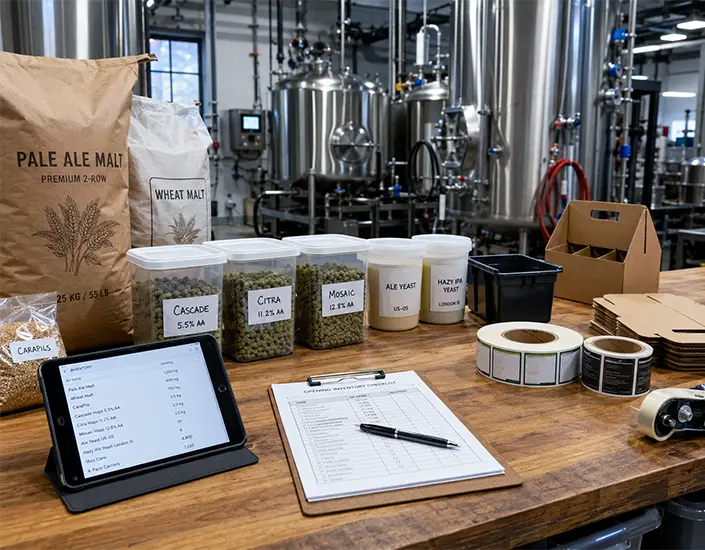
Ingredients shape flavor, but suppliers shape reliability. Working with a dependable brewery inventory supplier ensures consistent access to malt, hops, yeast, cleaning chemicals, and packaging materials.
Supply disruptions can halt production entirely. Strong supplier relationships reduce risk and support predictable cash flow.
Clear ordering schedules, minimum quantities, and delivery timelines should be established early. As volume grows, inventory tracking systems help reduce waste and manage costs.
Step 5 - Build Your Brand From Logo to Launch Merch
Breweries do not win on beer alone. They win on memory and consistency. Branding is not just a logo. It is how your space feels, how your packaging looks, and how consistently your identity shows up everywhere customers interact with you.
Many brewery owners delay brand decisions until late in the process. That usually leads to rushed, inconsistent execution. A better approach is to define your visual system early and apply it consistently across signage, menus, packaging, and merchandise.
Visual Identity for Brewery Owners
Strong brands prioritize clarity over complexity. Logos should be legible at a distance. Typography should be consistent. Colors should reproduce well across print and digital formats.
Your brand must work on tap handles, pint glasses, can labels, menus, and social media. When visuals are designed with those applications in mind, your brewery feels intentional rather than improvised.
Why Custom Coasters Matter on Day One
Tabletop branding is one of the easiest wins in a taproom. Coasters sit in front of customers throughout their visit without interrupting the experience.
Clean, well-designed custom coasters help new spaces feel finished, even while operations are still settling in. They also reinforce brand recognition through repetition.
If you want inspiration that aligns with different taproom styles, exploring curated coaster designs can simplify early decisions without sacrificing quality.
Step 6 - Design Your Brewery Menu and Taproom Experience
Your menu is not just informational. It is a decision tool. The easier it is to choose, the smoother service flows and the more confident guests feel.
Taproom experience is built from small details working together. Layout, lighting, seating, sound levels, and service pacing all influence how long customers stay and whether they return.
Beer Styles, Flights, and Seasonal Rotations
Balanced menus help first-time guests find something quickly. Too few options feel limiting. Too many create decision fatigue and inventory complexity.
Flights encourage exploration while reducing risk. Seasonal rotations keep regulars engaged, but they benefit from structure. Consistency helps customers form favorites and build loyalty.
Taproom Details That Shape First Impressions
First impressions happen quickly. Cleanliness, signage, comfort, and organization are noticed immediately.
Tabletop items quietly support that experience. Coasters protect surfaces, reduce mess, and add order. They can also carry helpful information without feeling promotional.
If beer is central to your identity, dedicated beer coasters aligned with your packaging and taproom aesthetic reinforce cohesion and professionalism.
Step 7 - Marketing and Promoting Your Brewery Launch
Even the best beer needs visibility. Marketing should not begin after opening day. It should be part of your brewery opening checklist from the start.
Early marketing is about relevance, not reach. You want the right audience to understand who you are and why your brewery exists.
Pre-Launch Marketing for Your Own Brewery
Behind-the-scenes content builds anticipation and trust. Sharing build-outs, equipment arrivals, and test batches creates connection before the first pour.
Email lists, social previews, and soft openings build momentum without heavy spending. Physical brand assets reinforce credibility from day one.
Grand Opening Promotions That Drive Repeat Visits
Successful openings feel intentional. Limited releases, sampler flights, and early-access incentives encourage exploration without overwhelming staff.
Physical takeaways matter. Coasters often leave with customers and reappear later, extending brand presence beyond the taproom.
Step 8 - Managing Operations and Planning for Growth
Once doors open, focus shifts to sustainability. Smooth operations protect margins and staff morale. Growth planning ensures success does not create strain.
Staffing, Inventory, and Day-to-Day Operations
Clear roles, training, and documented procedures reduce burnout and improve consistency. Inventory discipline prevents both shortages and excess.
Operational details like tap maintenance and glassware rotation quietly influence customer satisfaction.
Scaling Your Brewery Business Without Losing Quality
Growth introduces complexity. Additional capacity, expanded distribution, or new locations require careful planning.
A growing brewery business must protect quality through consistent sourcing, training, and maintenance. Expansion should feel intentional, not reactive.
Brewery Launch Kit Essentials - Your Quick Brewery Opening Checklist
If you want a high-level reference, this brewery checklist keeps priorities visible:
- Define your brewery concept and positioning
- Create a detailed business plan
- Separate personal and brewery expenses
- Secure zoning approval and licenses
- Select appropriately sized brewing equipment
- Install fermentation tanks and plan packaging workflows
- Partner with a reliable brewery inventory supplier
- Build a cohesive brand identity
- Design a functional taproom experience
- Prepare launch marketing assets
- Train staff and document procedures
- Plan for scalable growth
Revisiting this brewery opening checklist regularly keeps decisions grounded as excitement builds.
Final Thoughts - Launch Your Brewery With Confidence
Opening a brewery is demanding, but it does not need to feel overwhelming. When planning is deliberate and execution is consistent, complexity becomes manageable. A successful brewery is built through preparation, consistency, and attention to detail, not shortcuts.
The strongest breweries are not built on shortcuts. They are built by operators who respect details, plan carefully, and design every touchpoint with intention.
If you are preparing for launch or refining your final plan, start with the elements your customers will see and touch every day.
Share: