Comparing Coaster Materials: Pulpboard vs Cork vs Rubber

 Design is how it works. - Steve Jobs
Choosing the right coaster material is more important than most businesses realize. From performance to cost, the coaster you select affects both customer experience and brand perception. Among the most popular choices are pulpboard, cork, and rubber. Each offers unique benefits that suit different business environments and promotional goals.
In this guide, we will compare pulpboard vs cork coasters and explore how they stack up against rubber options. By the end, you will have a clear understanding of which material best represents your brand and fits your budget.
Overview of Common Coaster Materials
Businesses use a range of coaster materials to achieve different outcomes. Some prioritize low cost and print quality, while others emphasize longevity and eco-friendly appeal.
Pulpboard coasters are the classic choice for bars, restaurants, and promotional events, often used as custom paper coasters for high-volume branding. They are affordable, customizable, and effectively absorb moisture, making them ideal for large-volume orders.
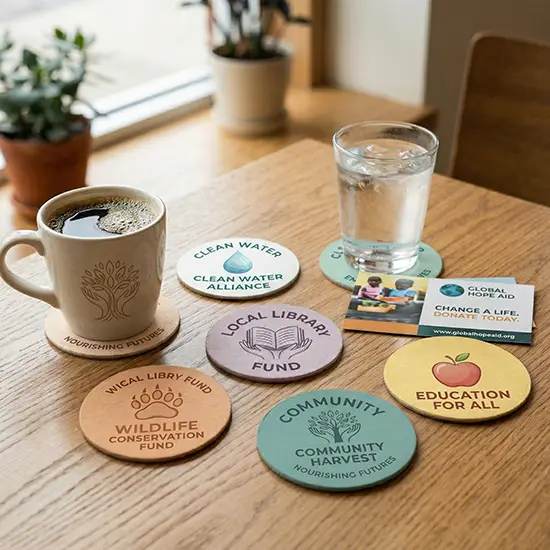
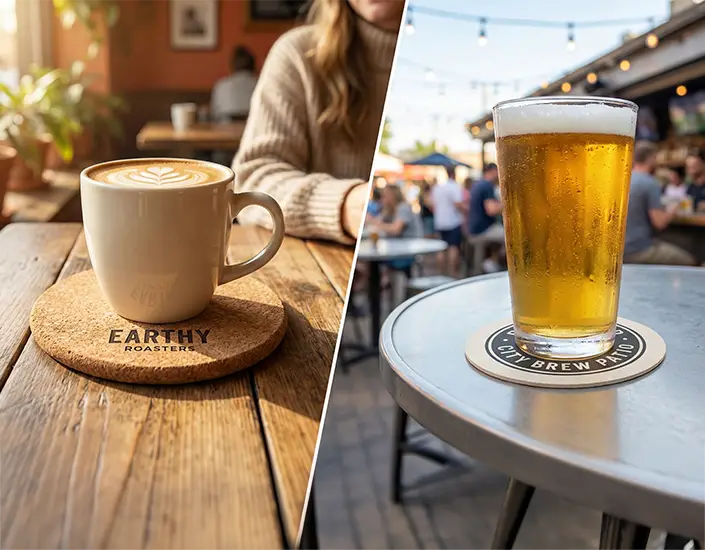
Cork coasters appeal to sustainability-minded buyers while offering strong aesthetic appeal through their natural texture and tone. They have a natural texture, offer strong grip, and absorb moisture well.
Rubber coasters are known for durability and flexibility. These work well in high-traffic environments where repeated use is common.
Paper coasters and custom coasters also remain in demand for smaller runs or event branding. Each type serves a purpose, and the best material depends on your priorities for aesthetics, performance, and lifespan.
Pulpboard Coasters: A Cost-Effective and Customizable Option
What Are Pulpboard Coasters?
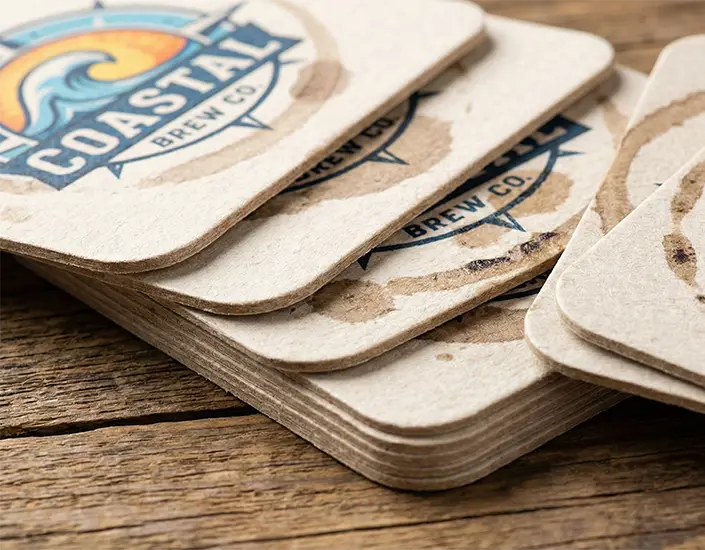
Pulpboard coasters are made from compressed layers of wood pulp and are often referred to as paperboard coasters in commercial printing. This material is specifically engineered to be absorbent and biodegradable. Because of their structure, pulpboard coasters effectively soak up liquid from cold drinks, preventing drips and stains on tables.
Businesses prefer pulpboard because it provides an eco-friendly and highly printable surface. The material handles full-color designs, detailed artwork, and custom logos with exceptional clarity.
As absorbent coasters, they strike an ideal balance between function and branding potential. Unlike plastic or metal options, they also convey a natural and approachable feel that resonates with eco-conscious customers.
The Benefits of Pulpboard Coasters for Businesses
From a business standpoint, pulpboard coasters deliver impressive value. They are inexpensive to produce in bulk, which makes them perfect for breweries, bars, and hospitality groups that need thousands of pieces at once.
Their superior moisture absorption helps protect furniture while maintaining a clean, polished look during service. Because they absorb liquid, customers don't have to deal with condensation rings or sticky tables.
Printing on pulpboard produces vivid colors and sharp detail, making custom paper coasters ideal for showcasing logos, taglines, and promotional messages effectively. These custom printed coasters enhance brand visibility every time a drink is served.
Whether you run a busy pub or a promotional event, pulpboard coasters are a dependable and cost-effective solution for drink coasters that look professional and perform well.
Ideal Uses for Pulpboard Coasters
The affordability and versatility of pulpboard coasters make them suitable for a wide range of uses. Bars and restaurants use them for daily service, while breweries rely on them for tasting rooms and product launches.
They also perform well in event settings, where customers want to distribute promotional materials that are both useful and recyclable.
When businesses look for coasters that showcase their branding affordably, pulpboard consistently ranks at the top. It delivers great print quality without the premium price of more permanent materials.
Custom Pulpboard Coasters for Branding
Custom designs are where pulpboard really shines. Because the surface is so print-friendly, brands can incorporate full-color graphics, high-resolution logos, or QR codes that lead customers to websites or social pages.
Blank coasters can be ordered for small runs or personalized with seasonal artwork. Businesses looking for custom coasters can choose different thicknesses, shapes, and finishes to fit their visual identity.
For a promotional item that is practical, affordable, and good for the planet, custom pulpboard coasters are a reliable favorite.
Cork Coasters: Natural Absorbency and Eco-Friendly Appeal
What Are Cork Coasters?
Cork is harvested from the bark of the cork oak tree without harming it, making the material renewable and highly sustainable. The texture is soft but resilient, providing excellent grip on tables and countertops.
Cork's natural structure allows it to absorb moisture, resulting in thicker coasters that keep surfaces dry and feel more substantial in hand. Businesses that want long-lasting and environmentally conscious drink coasters often turn to cork because it pairs organic aesthetics with durability.
Benefits of Cork Coasters for Brand Identity
When it comes to brand presentation, cork coasters offer a tactile and sophisticated look that customers notice immediately. The material complements natural decor themes and gives businesses an eco-friendly edge.
Brands that align with sustainability goals or artisanal values often choose cork because it helps tell that story. A cork coaster can complement any rustic, minimal, or nature-inspired design scheme.
Cork also conveys quality. Its solid feel and textured surface suggest longevity and care, helping reinforce a brand's premium image. Whether you are a cafe, winery, or boutique hotel, cork coasters enhance perception and show attention to detail.
Durability and Moisture Absorption of Cork Coasters
One of cork's greatest strengths is its ability to resist water rings and maintain absorption through repeated use. It does not warp or peel like some lower-grade paper options.
The material naturally handles moisture absorption better than most alternatives, which helps keep tabletops spotless even after hours of serving cold drinks. The result is thicker coasters that last longer and maintain their shape through repeated use.
Because of these qualities, cork is often favored in homes, restaurants, and event spaces that value sustainability but also want coasters they can reuse. Even though they cost more than pulpboard, absorbent coasters made of cork pay off over time through longevity and customer satisfaction.
Rubber Coasters: Flexibility and Durability for Heavy Use
What Are Rubber Coasters?
Rubber coasters are designed for strength, durability, and flexibility. They are often made from natural or synthetic rubber and sometimes blended with silicone coasters for added softness and grip. These coasters are resistant to tearing, bending, and slipping, making them ideal for high-traffic environments such as restaurants, bars, or outdoor patios.
Unlike pulpboard or cork, rubber coasters are fully washable and reusable. They can withstand heavy use without losing shape or color, which makes them a practical choice for businesses that want long-term solutions.
The Benefits of Rubber Coasters for Busy Environments
For high-volume establishments like breweries, cafes, and hotels, rubber coasters offer durability and consistency. They maintain their look and performance even after hundreds of uses. Their strong grip prevents sliding and reduces the risk of spills, which makes them especially useful in fast-paced settings.
Rubber also pairs well with alternative materials. When paired with recycled cork or bamboo fabric, it creates a sustainable and durable option that balances practicality with eco-consciousness.
These coasters also complement branded decor in modern or industrial-style interiors. They come in a range of colors and finishes that can match brand palettes or design schemes. Businesses that need both function and longevity will find rubber coasters a dependable choice.
Advantages of Rubber Coasters for Moisture Control
Although rubber itself does not absorb liquid, it provides excellent moisture absorption control through its raised edges and textured surfaces. This helps contain condensation and keeps drinks stable.
Many absorbent coasters in this category feature grooved surfaces that trap drips and prevent water rings on furniture. This is particularly useful in commercial environments where presentation and cleanliness are priorities.
Compared with pulpboard and cork coasters, rubber provides a more durable experience that resists wear while still protecting surfaces.
Custom Rubber Coasters for Long-Lasting Branding
From a branding perspective, custom coasters made from rubber are long-term marketing tools. Logos and artwork can be printed, embossed, or laser-etched for lasting visibility.
Because they are washable, custom printed coasters made from rubber can continue promoting your brand for years without replacement. This makes them a great investment for companies that value reusability.
Rubber coasters may not have the same absorbent qualities as pulpboard or cork, but they excel in durability and clean aesthetic appeal for modern environments. For heavy-duty use, they are the clear winner.
Comparing Pulpboard, Cork, and Rubber Coasters: Which One Is Right for Your Business?
Choosing the right material comes down to your priorities. The differences between pulpboard vs cork coasters become clear when you consider cost, sustainability, branding impact, and durability. Adding rubber into the mix provides a useful third option for long-term use.
Absorbency: Pulpboard coasters provide excellent moisture absorption, soaking up drips and keeping tables dry. Cork coasters also perform well in this category with a natural ability to absorb moisture and prevent water rings. Rubber coasters, by contrast, do not absorb liquid but protect surfaces through raised edges and non-slip texture.
Durability: Pulpboard is intended for single or limited use, making it best for promotions or events. Cork coasters are reusable and maintain their look over multiple uses. Rubber coasters stand out as the most durable of all, capable of lasting for years with minimal wear.
Eco-Friendliness: If sustainability is a key factor, both pulpboard and cork are excellent choices. Pulpboard is biodegradable and recyclable, while cork is a renewable material harvested without harming trees. Rubber coasters are less natural but can be recycled in certain forms.
Brand Printing Quality: For bright, full-color artwork and detailed designs, pulpboard coasters offer the best print surface. Cork has a textured finish that looks best with engraving or simple, bold graphics. Rubber coasters support high-quality screen printing and embossing that lasts through repeated cleaning.
Cost Efficiency: Businesses on a budget often prefer pulpboard because it delivers professional branding at the lowest cost. Cork is mid-range in price, while rubber requires a higher upfront investment.
Common Uses: Pulpboard coasters are perfect for bars, breweries, and high-volume events. Cork coasters suit cafes, wineries, and eco-conscious brands that want to highlight sustainability. Rubber coasters are the best choice for hotels, restaurants, and outdoor venues where durability and reusability matter most.
When comparing pulpboard vs cork coasters, the right choice depends on how often they will be used, the image your brand wants to project, and how much emphasis you place on environmental responsibility. Many businesses use a mix of materials. For example, custom pulpboard coasters for short-term promotions and cork or rubber coasters for long-term branding.
If your goal is to create large batches of promotional coasters for giveaways, custom paper coasters made from pulpboard provide unbeatable cost efficiency. They showcase your artwork beautifully and can be recycled after use.
If you want a natural, premium look that aligns with sustainability goals, cork coasters are a smart choice. They handle water rings well and last longer, making them suitable for restaurants, boutiques, and event planners.
If your environment demands durability and flexibility, rubber coasters perform best. They resist wear and are easy to maintain, ideal for hospitality businesses that reuse coasters daily.
In some cases, businesses mix and match these materials for different purposes. For example, a brewery might use custom pulpboard coasters for tasting events, while offering branded cork coasters or rubber coasters as retail merchandise. This layered approach allows brands to meet both marketing and operational needs efficiently.
When comparing pulpboard vs cork coasters, the choice ultimately comes down to how often they will be used, the image your brand wants to project, and how much emphasis you place on environmental impact.
Conclusion: Choose the Right Coaster Material for Your Brand
Every business has different needs, and your coaster material should reflect your priorities. Pulpboard coasters are perfect for affordability, vivid printing, and medium-term promotions. Cork coasters offer a reusable solution that aligns with green branding values. Rubber provides unmatched longevity in fast-paced or outdoor environments.
Whether you prioritize eco-friendly materials, long-term use, or vibrant custom printing, there is a perfect option for your business. Understanding the strengths of pulpboard vs cork coasters helps you make an informed decision that benefits both your brand and your customers.
Explore more about customization, materials, and pricing to find what fits your needs best.
Share: