Eco Friendly Coasters Start with Pulpboard
 What you do makes a difference, and you have to decide what kind of difference you want to make. - Jane Goodall
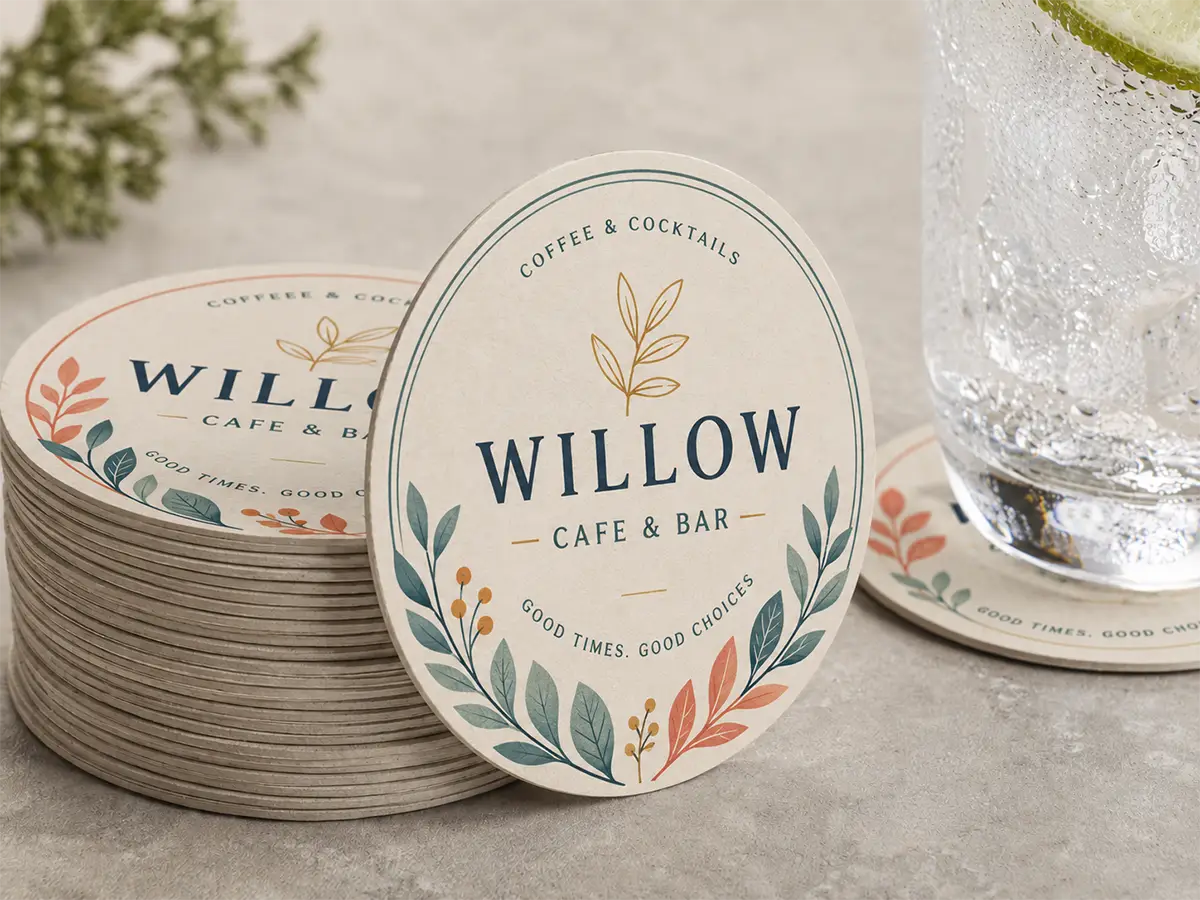
Eco-friendly coasters may look like a small detail, but in hospitality, corporate events, and brand-driven spaces, they do a practical job every time a drink is served. They protect tables, manage condensation, support cleanliness, and keep a message directly in front of customers. When the material is chosen properly, a coaster also says something about the business using it.
For buyers comparing eco coasters, pulpboard is the material that best balances sustainability, performance, cost, and print quality. It is made for beverage service, not adapted from home decor or packaging stock. That matters because a coaster has to absorb moisture, hold its shape, and present the brand clearly through real use.
Pulpboard eco friendly coasters are plastic free, recyclable, biodegradable, and made from renewable fiber. They also work in busy commercial environments where drinks are replaced, tables turn quickly, and branding needs to stay visible. For bars, restaurants, breweries, offices, and events, that combination is hard to beat.
What Is Pulpboard Coaster Material?
Pulpboard is a dense, fiber-based board manufactured specifically for beverage absorption and print performance. It is not regular paper, thin cardboard, or cardstock cut into a round or square shape. Authentic pulpboard is engineered from the beginning to pull moisture away from glassware while still accepting printed artwork cleanly.
This is why pulpboard is commonly used for professional bar coasters. It handles condensation better than paper alternatives and keeps the printed surface usable during service. When customers search for eco-friendly coasters that actually work, pulpboard is usually the material they are looking for.
Renewable Wood Pulp
Pulpboard starts with renewable wood pulp from managed forestry sources. Wood pulp can be regrown, replanted, and responsibly harvested as part of a longer supply cycle. That gives pulpboard a clear advantage over products made from fossil-fuel-based plastics or synthetic materials.
The goal is not only to make a coaster that looks natural. The goal is to use sustainable materials that still perform in the real world. A coaster that fails quickly, sticks to glassware, or needs to be replaced too often does not help the buyer or the environment.
Recycled and Recyclable
Many pulpboard coasters include recycled fiber content and can be recycled after use, depending on local recycling conditions and contamination levels. For high-volume buyers, this is important. Bars, breweries, festivals, and trade shows can go through thousands of coasters in a short period of time.
With pulpboard eco friendly coasters, buyers get a product designed for short-term beverage service without depending on plastic coatings or synthetic layers. That makes disposal simpler and supports a more circular material choice.
Vegetable-Based Inks
Printing is part of sustainability too. Quality pulpboard coasters can be printed with alcohol-resistant vegetable inks that hold up around condensation and spills. These inks help preserve the look of the design without relying on harsh petroleum-based ink systems.
Vegetable-based inks also support a cleaner production approach and help avoid unnecessary toxic dyes. For buyers with sustainability standards, the board and the ink need to work together.
Why Pulpboard Coasters Perform Better
Sustainability alone is not enough. A coaster still has to do the job. Pulpboard performs well because it was built for beverage service, not for decoration only.
High Absorbency
The main job of a coaster is to manage condensation. Pulpboard fibers are designed to absorb moisture quickly and evenly, reducing pooling around the base of a glass. This helps keep tabletops cleaner, prevents glasses from sliding, and reduces the need for extra napkins or wipes.
A well-made pulpboard coaster is extremely absorbent without immediately breaking down. It can stay in place during a meal, a tasting flight, a meeting, or a multi-hour event while continuing to protect the surface underneath.
Durable and Warp-Resistant
Thin paper and cardstock can curl, soften, or stick to the bottom of a glass. Pulpboard is different. Its density helps it absorb moisture more evenly, which reduces warping and keeps the coaster stable.
That stability matters for branding. If the coaster curls or collapses, the message becomes harder to see. If it stays flat, the logo, QR code, promotion, or event message remains visible throughout the experience.
Made for Coaster Printing
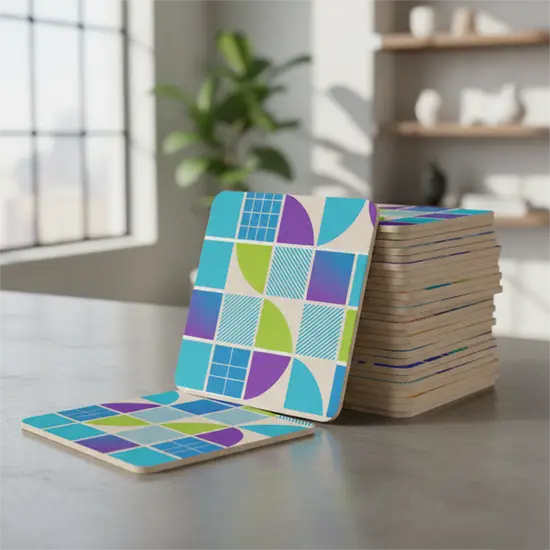
Pulpboard gives buyers a strong balance between ink coverage and absorbency. It can carry full-color artwork while still functioning as a moisture-management product. This is especially important for branded custom coasters, where the printed design is part of the value.
Coated or overly sealed materials may look bright at first, but they can reduce absorbency. Proper pulpboard printing protects the appearance of the artwork without turning the coaster into a plastic-like surface.
Why Pulpboard Coasters Are the Most Eco-Friendly Option
When buyers compare eco-friendly coasters, they should look at the full picture: sourcing, manufacturing, use, disposal, and performance. Pulpboard performs well across each of those stages.
Sustainability of the Paper and Pulp Industry
The paper and pulp industry is built around renewable raw materials, managed forestry, and large-scale recycling systems. While every supply chain should be evaluated carefully, pulp-based products have a major advantage because the core material comes from a renewable source.
Pulpboard also fits real purchasing needs. It can be produced at volume, printed consistently, and used across hospitality, office, event, and promotional environments. That makes it a practical sustainability choice, not just a niche alternative.
Renewable, Recyclable, and Biodegradable Materials
Pulpboard checks three important boxes. It is renewable at the source, recyclable after use where facilities accept it, and biodegradable if it enters waste streams. Few coaster materials offer that same mix while still performing well around beverages.
This is where pulpboard eco friendly coasters stand apart from many novelty products. A coaster can look green on the surface, but if it does not absorb moisture, recycle easily, or break down responsibly, the environmental value is limited.
Printed With Alcohol-Resistant Vegetable Inks
Alcohol-resistant vegetable inks help the finished coaster stay useful around beer, cocktails, coffee, soda, and other beverages. The print needs to resist normal exposure without sealing the coaster so heavily that it stops absorbing condensation.
This balance is important. The best eco coasters are not just brown, plain, or natural-looking. They are well-made printed products that combine performance, sustainability, and brand presentation.
How Eco Friendly Coasters Compare to Other Materials
Many materials are marketed as green, natural, or reusable. Some are useful in the right setting, but they do not all solve the same problem. For commercial beverage service, absorbency and disposal matter.
Pulpboard vs Cork Coasters
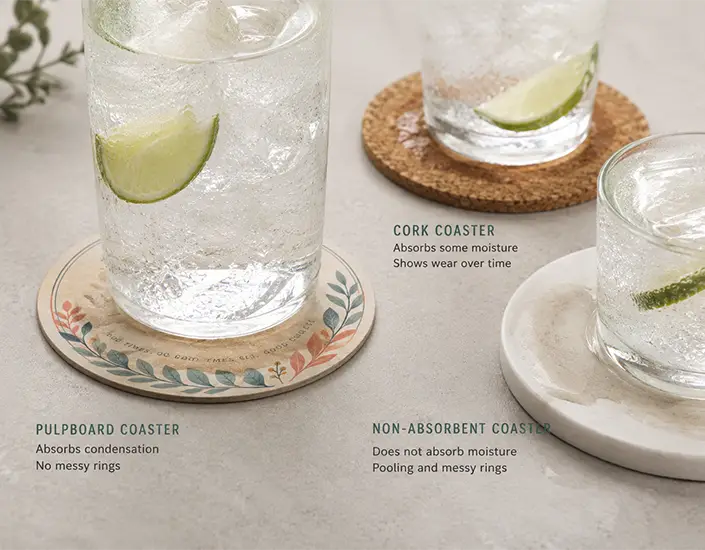
Cork coasters are often seen as sustainable because cork can be harvested from bark. That is a real benefit, but cork behaves differently than pulpboard around moisture. Cork tends to repel liquid more than absorb it, so condensation can bead on the surface and spread onto the table.
Over time, cork coasters can also stain, crack, or hold odor, especially in busy hospitality settings. Pulpboard absorbs liquid more directly and is easier to replace at scale. For high-turnover bars, restaurants, breweries, and events, pulpboard is usually the better fit.
Pulpboard vs Forever Reusable Coasters
Forever reusable coasters, such as silicone, stone, ceramic, or resin, are often presented as waste-free. In practice, they create trade-offs. Many do not absorb condensation well, so liquid remains on the surface or transfers to the table.
Some forever reusable products are marketed for home use by adding essential oils for scent or ambiance. That may work for personal decor, but it is not ideal in shared beverage service. Adding essential oils can create residue, scent transfer, cleaning concerns, and inconsistent customer experiences.
Reusable options also require washing, storage, and replacement when damaged. Some need cleaning with vegetable soap to remove oils, stains, or buildup. That maintenance creates labor and water use that buyers should consider before assuming reusable automatically means better.
Why Plastic and Silicone Fall Short
Plastic and silicone coasters may be durable, but they are poor choices for buyers focused on sustainable materials. They are usually not biodegradable, are difficult to recycle, and can rely on additives or synthetic binders.
They also offer little absorbency. In many cases, they act more like a decorative mat than a true coaster. For businesses trying to reduce plastic use, pulpboard drink coasters are a more visible and practical sustainability step.
Benefits of Eco-Friendly Pulpboard Drink Coasters
The value of pulpboard goes beyond environmental claims. It supports the way businesses actually use coasters every day.
Durability and Absorbency
A good pulpboard coaster is strong enough for service and absorbent enough to control condensation. That combination protects furniture, improves presentation, and keeps the beverage area looking cleaner.
Because pulpboard is extremely absorbent, it can also reduce the need for extra napkins. That matters in restaurants, bars, offices, and events where small waste reductions add up across many drinks.
Versatile for Home, Office, and Events
Pulpboard drink coasters work across many settings. In offices, they protect desks, boardroom tables, and meeting spaces. At events, they manage condensation across hundreds of guests. In hospitality, they support daily service while keeping branding visible.
Unlike decor-focused coasters built around essential oils or fragrance, pulpboard coasters are designed for moisture control first. That makes them better suited to shared spaces where cleanliness, consistency, and simple disposal matter.
Perfect for Branding and Promotional Campaigns
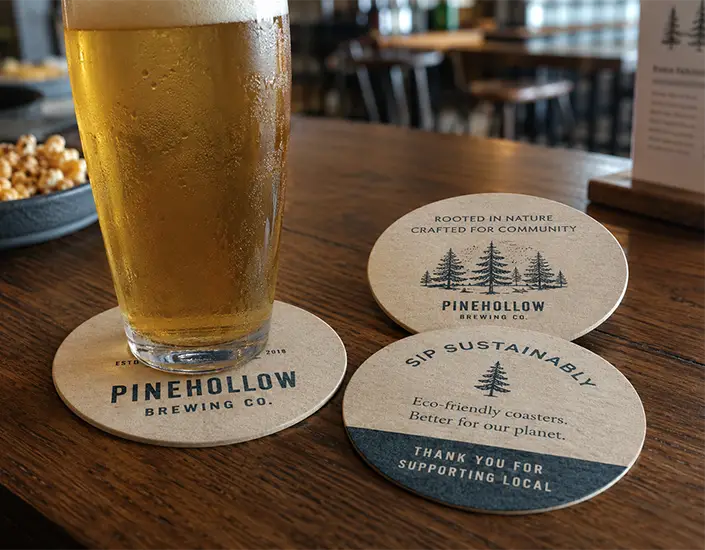
Coasters are useful promotional products because they are not handled once and tossed aside. They sit in front of the customer during a drink, meal, tasting, or event. That creates repeated impressions without interrupting the experience.
For a brewery, restaurant, hotel, corporate event, nonprofit campaign, or product launch, eco-friendly coasters can carry a logo, QR code, offer, event schedule, or campaign message. They are practical, visible, and easy to distribute.
Popular Eco-Friendly Coaster Options
Different buyers need different quantities, materials, and finishes. Pulpboard gives enough flexibility to support both small campaigns and large-volume programs.
Value Pack Beverage Coasters
Value pack beverage coasters are ideal for high-volume use. Bars, breweries, restaurants, festivals, and distributors often need reliable coasters at scale. In those cases, predictable unit cost, consistent print quality, and dependable production matter.
A value pack also makes sense for seasonal campaigns, event series, and recurring promotions where the same design may be used across multiple locations.
Short-Run Custom Coasters
Short-run coasters are useful for small businesses, special events, private functions, corporate meetings, and limited-time campaigns. They allow buyers to test a design, support a one-time promotion, or order only what they need.
This is especially helpful for sustainability-focused buyers who want to avoid over-ordering. The most responsible order is often the one that matches actual use.
Responsible Manufacturing and Fair Wages
Sustainability should include how products are made, not only what they are made from. Responsible manufacturers consider sourcing, production quality, working conditions, fair wages, and waste reduction.
At Coaster Factory, the goal is to make coaster ordering practical for businesses while keeping quality, material performance, and production responsibility in focus. Buyers should look beyond the lowest unit price and consider whether the product will perform properly, arrive on time, and represent the brand well.
Get a Custom Coaster Quote
If you are sourcing eco-friendly coasters for hospitality, corporate events, promotional campaigns, or everyday beverage service, pulpboard remains one of the most practical options available. It offers absorbency, print quality, responsible construction, and a clear sustainability story.
Whether you need short-run coasters for a specific event or high-volume coasters for ongoing service, choosing a manufacturer experienced with pulpboard helps ensure the final product looks right and works correctly.
Final Fact: Pulpboard Is One of the World's Most Sustainable Coaster Materials
Pulpboard brings together renewability, recyclability, biodegradability, print performance, and real beverage-service function. It is not a gimmick material and it is not just a decorative surface. It is a proven substrate built for the job.
That is why pulpboard continues to define what eco-friendly coasters should be: practical, printable, absorbent, responsible, and ready for real-world use.
Share: