Creative Restaurant Branding Ideas to Stand Out
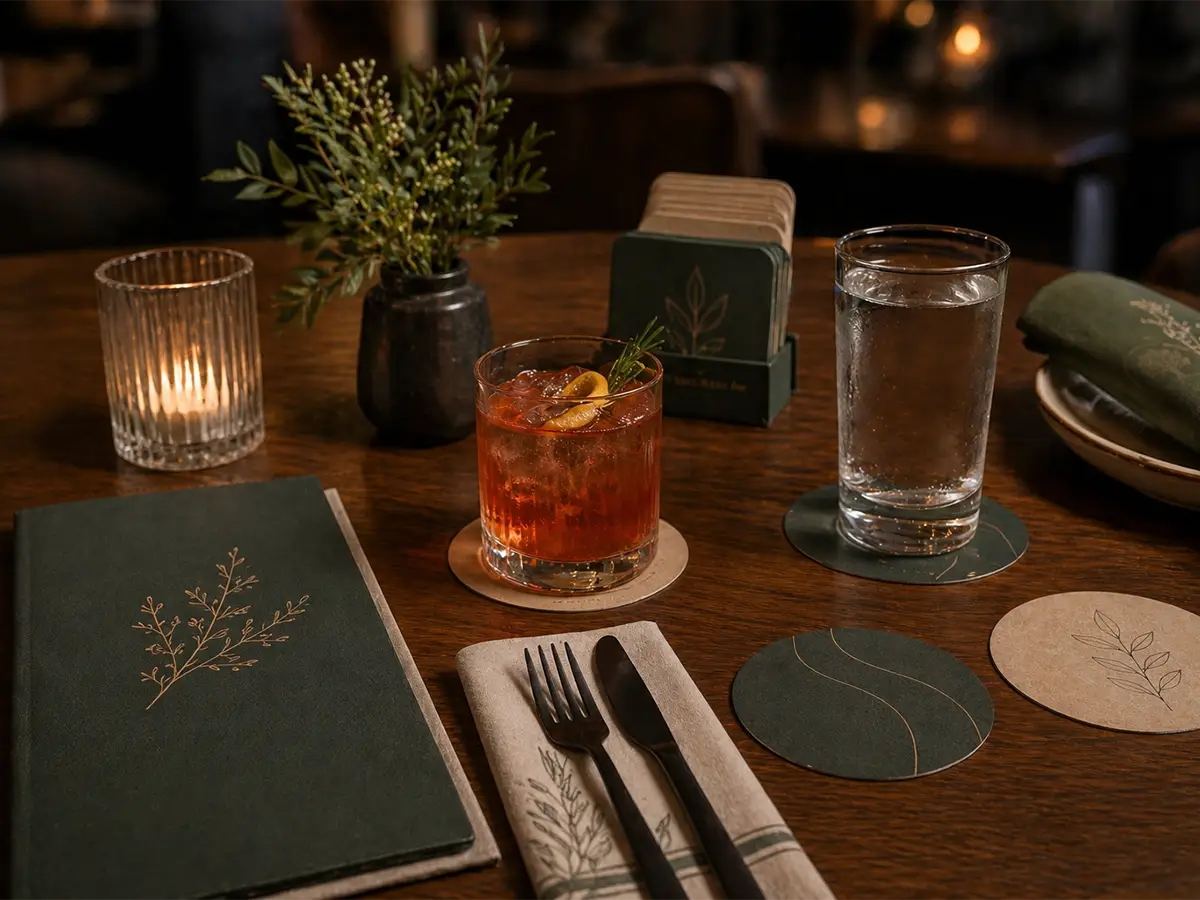
 The strongest branding isn't what people see once, it's what stays in front of them the entire experience. - Coaster Factory
Summary
- Restaurant branding requires visual consistency across every touchpoint, from coasters to menus to uniforms.
- Custom genuine pulpboard coasters anchor brand presence at tables while supporting thousands of impressions per set.
- Successful restaurants use sensory design, seasonal refreshes, and cohesive visual planning to maintain a recognizable identity.
Why Branding Consistency Drives Restaurant Success
Restaurant branding ideas have the most impact when they connect every guest-facing touchpoint into a single, recognizable identity. From the coaster placed under the first drink to the uniform the server wears, each element either reinforces or undermines the impression the restaurant is trying to create. Guests form judgments quickly based on what they see, handle, and experience from the moment they sit down.
Visual consistency signals professionalism and builds the familiarity that keeps guests returning. According to Lucidpress brand consistency research, businesses that present their brand uniformly across all touchpoints can see higher revenue than those with fragmented visual identities. For restaurants, this means applying the same colors, fonts, and design language to coasters, menus, signage, and digital platforms so that every encounter with the brand reinforces the same message.
According to the National Restaurant Association, the U.S. restaurant industry generates over a trillion dollars in annual revenue, making differentiation more critical than ever. Restaurants that invest in cohesive branding give guests a clear reason to choose them over competitors offering similar food at similar price points.
What Restaurant Branding Actually Encompasses
Restaurant branding encompasses three core components that work together to create a memorable identity. Visual branding includes the logo, color palette, typography, and design elements that appear on everything from signage to coasters. Verbal branding covers the tagline, menu descriptions, and the tone used across all marketing materials. Experiential branding involves the atmosphere, service style, and sensory details that shape how guests feel in the space.
A waterfront seafood restaurant might use nautical blues and weathered wood textures across coasters, menus, and wall decor, with servers in crisp white shirts and navy aprons. A downtown farm-to-table cafe could feature earthy greens and hand-drawn vegetable illustrations across all materials, with reclaimed wood furniture and casual staff attire to match. Neither approach is right or wrong. What matters is that every element supports a cohesive story that helps guests understand what makes the restaurant worth returning to.
The practical challenge is maintaining this consistency across dozens of touchpoints while running daily operations. Strategic use of quality promotional products and planned design systems makes that consistency achievable without requiring constant creative effort.
Core Visual Touchpoints Guests Handle Every Visit
Custom Coasters as Foundational Branding Surfaces
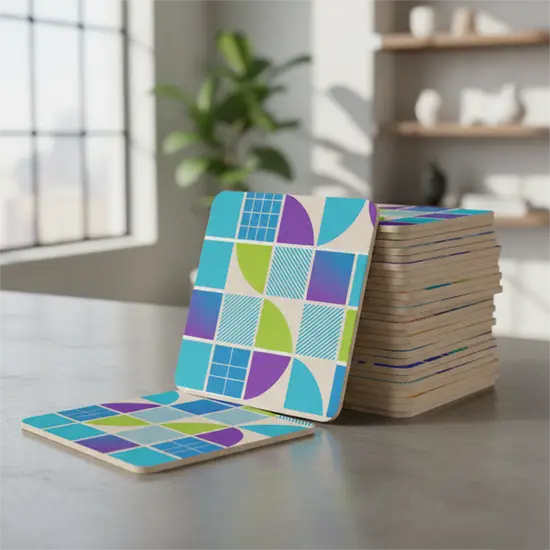
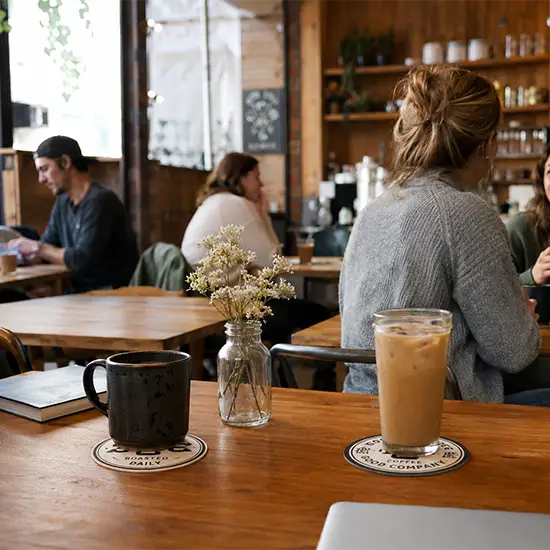
Custom genuine pulpboard coasters are among the most cost-effective branding investments available to restaurants because they combine a functional purpose with consistent table visibility throughout every visit. Guests handle coasters repeatedly from the time drinks arrive to the time they leave. Unlike table tents that get pushed aside or posters that blend into the background, a coaster stays directly beneath the guest's drink and in their line of sight for the entire meal.
Logo placement on coasters requires deliberate thinking. The mark should be large enough to read clearly but balanced with surrounding design elements so the coaster does not feel cluttered. Many restaurants center the logo with sufficient white space around it, which ensures legibility whether the coaster is under a water glass, a cocktail, or a coffee mug. Custom restaurant coasters are produced on genuine pulpboard with full-color CMYK printing, providing a reliable branding surface that holds up through heavy daily use.
Color selection directly affects brand recognition. The coaster palette should match the restaurant's interior design and other branded materials as closely as possible. Approving a physical proof before a full production run confirms that colors translate as intended and that the design reads clearly at table distance.
For restaurants with a distinctive concept or architectural identity, custom shape coasters offer an option beyond standard round or square formats. A guitar-shaped coaster for a music-themed bar or a leaf silhouette for a garden-concept restaurant creates an immediate visual connection to the brand that a standard shape cannot achieve on its own.
For restaurants seeking a premium finish on event coasters, VIP menus, or upscale branding materials, foil-stamped coasters add a metallic accent that elevates the perceived quality of the brand touchpoint without requiring a full redesign of existing artwork.
Storytelling Through Coaster Artwork
Coaster artwork can carry more than a logo. A neighborhood pizzeria might feature vintage photographs of the building's history. A craft brewery could illustrate ingredient origins or brewing process diagrams. These visual narratives give guests something to discover while waiting for orders, often prompting conversations that deepen their connection to the restaurant's story. Guests who feel a personal connection to the brand are more likely to return and more likely to recommend the restaurant to others.
Seasonal rotation keeps the brand fresh without abandoning its core identity. Designing a base coaster template with consistent logo placement and typography, then producing seasonal variations for holidays, menu launches, or local events, maintains recognition while giving regulars something new to notice. Planning these rotations quarterly and aligning them with menu changes makes the most of each production run.
Menus and Table Accessories
Menu design should echo the visual language established by the coasters and other branded elements. Typography choices matter significantly here. Fonts that remain readable under restaurant lighting while reflecting the establishment's personality contribute to a cohesive experience. A fine dining restaurant might use elegant serifs while a casual concept opts for bold sans-serifs. Using the same font family across coasters, menus, and signage creates the visual coherence that guests register even when they cannot articulate why the restaurant feels well-considered.
Table accessories extend brand presence beyond the coaster. Napkin holders, table numbers, condiment caddies, and QR code display frames that align visually with the coaster design create a professional, intentional atmosphere at the table level. Custom table tents promoting specials should match the coaster design aesthetic so that every item a guest handles during the visit reinforces the same visual identity.
Sensory Branding: Sound, Scent, and Lighting
Visual consistency provides the foundation, but comprehensive restaurant branding engages more than one sense. Music selection should reflect the restaurant's personality while remaining appropriate for the target demographic. Volume levels matter as much as song choice. Background music should enhance conversation, not compete with it. Creating separate playlists for different dayparts helps breakfast service feel distinct from the dinner rush while staying within the same brand personality.
Scent has strong associations with memory and atmosphere. The aroma of fresh-baked bread can define a bakery cafe's identity, while wood smoke can characterize a grill-focused concept. Natural cooking aromas often work more effectively than artificial fragrances, which can overwhelm or conflict with food. Where a signature scent is used intentionally, it should align with the brand rather than contradict it.
Lighting design shapes mood and brand perception in ways guests feel immediately. Warm, dim lighting signals intimacy, which suits date-night restaurants. Bright, cool lighting energizes fast-casual spaces where turnover is a priority. Adjustable systems allow the atmosphere to shift across dayparts without the brand identity changing. When sensory elements align with the visual branding rather than working against it, guests encounter the restaurant as a coherent whole rather than a collection of unrelated decisions.
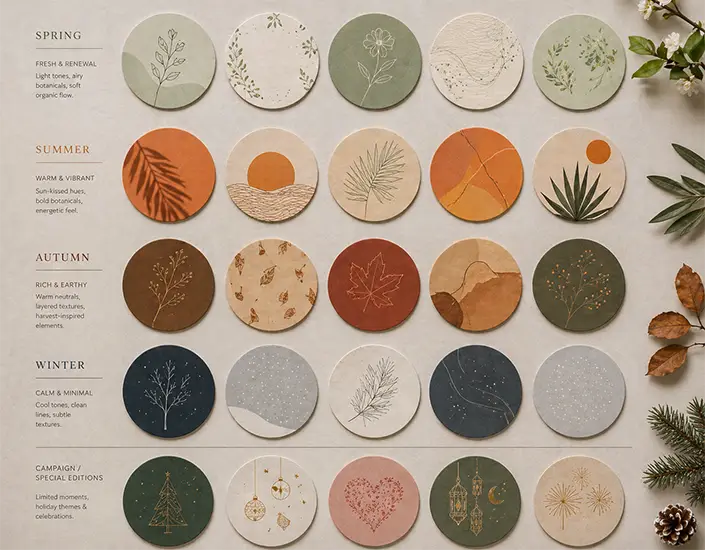
Seasonal and Limited-Edition Campaigns
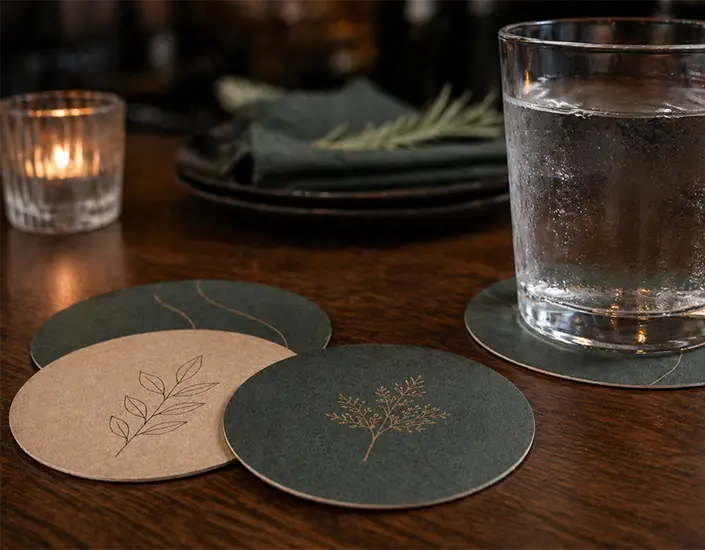
Seasonal marketing keeps a restaurant relevant throughout the year while maintaining core brand consistency. Limited-edition coasters and promotional materials create anticipation and give regulars a reason to visit more frequently. These campaigns work best when they enhance the existing visual identity rather than replacing it with a seasonal aesthetic that guests cannot connect to the brand they already know.
Holiday coaster designs offer natural promotional hooks. Christmas coasters that incorporate the restaurant's logo with subtle seasonal elements, or Valentine's Day versions that carry brand colors with minimal added detail, keep the restaurant's identity primary while acknowledging the occasion. Restraint tends to produce more effective results than fully seasonal designs that subordinate the brand to the theme.
Local artist partnerships add community dimension to seasonal campaigns. Commissioning a neighborhood artist to interpret the restaurant's brand through their own visual style creates limited editions that guests collect and share. These collaborations support local creative talent while generating culturally relevant designs that feel authentic to the restaurant's place in its community. Beginning design work at least eight weeks before each seasonal launch allows sufficient time for creative development, proofing, and production without incurring rush costs.
Merchandise and Take-Home Promotion
Restaurant merchandise turns satisfied guests into brand ambassadors in their daily environments. The most effective items are those guests would choose to use regardless of the brand connection. A well-designed vintage-inspired t-shirt from a neighborhood brewpub may become a local favorite. Custom pint glasses, ceramic mugs, and reusable bags are incorporated into daily routines and provide repeated brand exposure in contexts the restaurant cannot otherwise reach.
Including branded genuine pulpboard coasters in takeout orders extends the branding surface beyond the dining room without a high added cost. A coaster tucked into a delivery bag serves as a tangible reminder of the in-restaurant experience and can carry a QR code linking to online ordering or loyalty enrollment. Fully custom coaster designs accommodate this kind of multi-purpose use, with artwork that can include logos, QR codes, URLs, and promotional messaging within a single printed design.
Visual consistency across all merchandise ensures the brand presents professionally, whether it appears on a coaster, a t-shirt, or a coffee mug. Items that look as though they belong to the same family reinforce brand recognition. Items that do not undermine the investment made in cohesive table-level branding.
Bulk Ordering and Multi-Location Rollouts
Growth introduces new branding challenges. Whether opening a second location or refreshing a brand across multiple sites, bulk ordering supports consistent presentation while managing per-unit costs. Every location in a restaurant group should use identical coasters so that guests recognize the brand regardless of which site they visit. This uniformity strengthens marketing efficiency and builds trust with guests who move between locations.
Volume pricing makes comprehensive branding practical at scale. Ordering larger quantities reduces per-unit cost significantly compared to placing smaller repeat orders throughout the year. Planning annual coaster needs across all locations and consolidating into a single order maximizes value and simplifies inventory management. New site launches benefit from having sufficient stock for the first ninety days of operation, including inventory for grand opening events and initial promotional pushes.
Design templates that work consistently across all locations while accommodating minor customizations, such as address information or location-specific details, allow the brand to scale without requiring entirely new creative work for each new site.
Case Insight: A Restaurant Rebrand
Consider how a fictional farm-to-table restaurant might approach a complete rebrand after five years of operation. The original branding had accumulated inconsistencies over time: three different fonts in the logo, low-resolution coaster printing that blurred with use, menu designs that did not match signage, and staff uniforms in a color scheme that had no relationship to any other branded element. Despite strong food and service, the visual fragmentation made the restaurant appear less intentional than it was.
The rebrand began with simplification. A new logo used clean, modern typography with a single botanical icon reflecting the restaurant's garden-sourced menu. The color palette moved to warm earth tones, an olive green, terracotta, and cream combination that translated reliably to CMYK printing and aligned with the restaurant's identity. New coasters featured the simplified logo centered on a cream background with a subtle watermark pattern, minimal text, and the restaurant's tagline. The design read clearly at table distance and held up visually through repeated service.
Rolling out the rebrand required coordination across all materials simultaneously. Introducing new coasters while menus and signage still reflected the old identity would have created the same fragmentation that the rebrand was intended to resolve. Transitioning coasters, menus, signage, and uniforms at the same time, with staff briefed on the brand story and able to speak to it naturally, meant guests encountered a cohesive new identity from the first visit rather than a work in progress.
This hypothetical example illustrates why coasters often serve as the starting point for branding renovations. They are present at every table during every service, cost-effective to produce in quantity, and fast to update relative to signage or uniforms. A well-executed coaster redesign, consistent with the rest of the brand, can signal a refresh to returning guests before they have read a menu or spoken to a server.
Conclusion
Effective restaurant branding ideas extend well beyond logo design. Visual consistency across coasters, menus, table accessories, and sensory elements creates the kind of recognizable identity that guests associate with quality and return to reliably. Custom genuine pulpboard coasters anchor this branding ecosystem by providing consistent table visibility at every seat during every service, with a functional purpose that ensures they stay in use rather than getting set aside.
Seasonal campaigns, local artist collaborations, take-home merchandise, and bulk ordering for multi-location rollouts all extend the reach of a well-designed brand identity beyond the dining room. Each element reinforces the others when the visual language is consistent, and each undermines the others when it is not.
Ready to build a coaster program around your restaurant's brand identity? Explore custom restaurant coasters at Coaster Factory.
Share: