Promotional Products for Non-Profits: A Practical Guide to High-Impact Giveaways on a Lean Budget
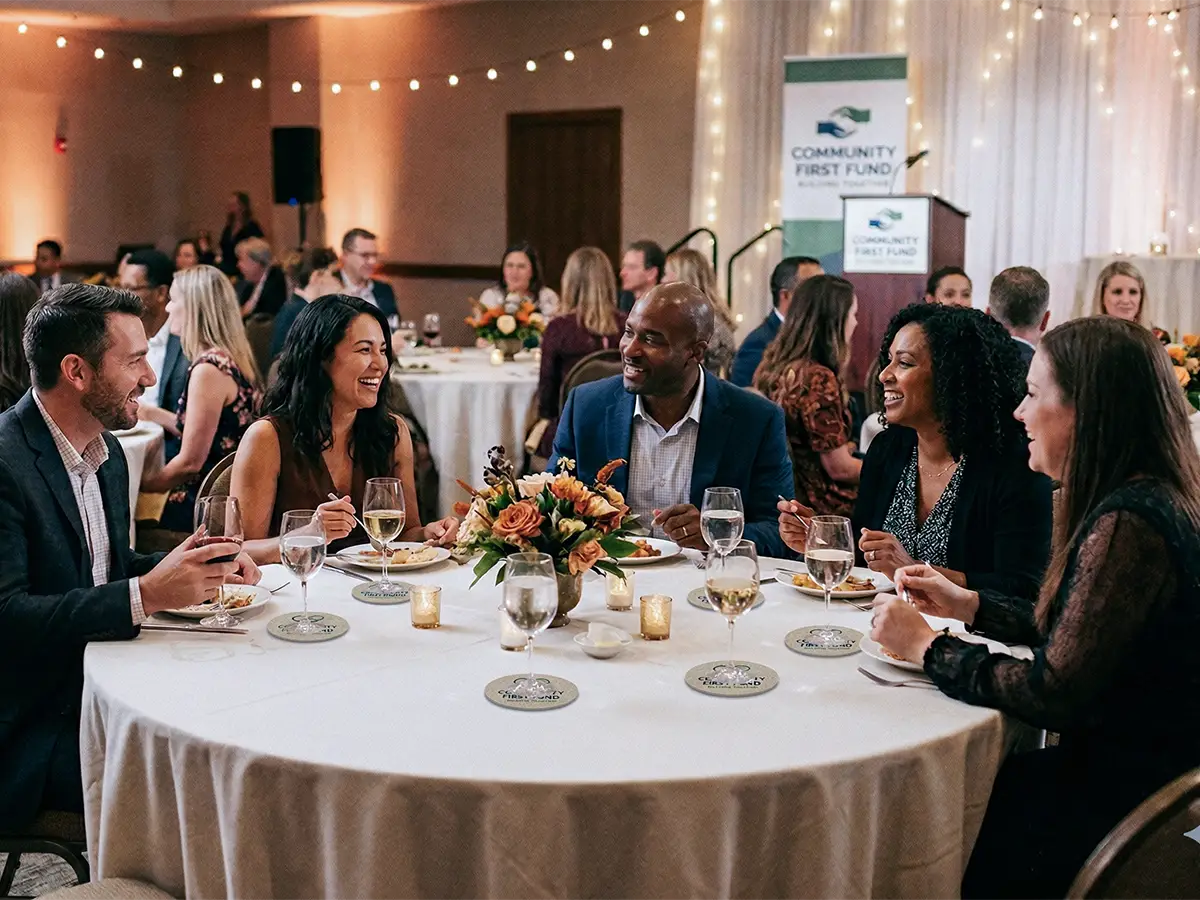
 A simple coaster can carry a powerful message long after the event ends. - Coaster Factory
Summary
- Use practical, daily-use items - especially custom pulpboard coasters - to keep your cause in sight.
- Plan for consistency: proof artwork, confirm CMYK limits, and order in bulk to lower unit cost.
- Track impact with simple tactics such as QR codes and post-event surveys.
Picture a packed community gala. Guests set down drinks on crisp, mission-themed coasters. Every glance reinforces your cause without spending a single extra dollar during the event.
Nonprofits juggle tight budgets and rising noise levels. Digital ads vanish in seconds. Tangible items often remain visible for months.
You will learn:
- What makes a promotional item effective for mission awareness?
- Why pulpboard coasters deliver consistent visibility at low cost.
- How to plan quantities, proof artwork, and track results without guesswork.
What Counts as a Promotional Item for Non-Profits?
Promotional items are practical objects imprinted with your logo or message. Supporters keep them because they serve a daily need.
Common categories include drinkware, writing tools, bags, apparel, and, critically, pulpboard coasters.
The best nonprofit giveaway ideas solve real problems. A coaster protects tables. A pen writes notes. A tote carries groceries. When your logo appears on something useful, it stays in circulation longer than any flyer or postcard.
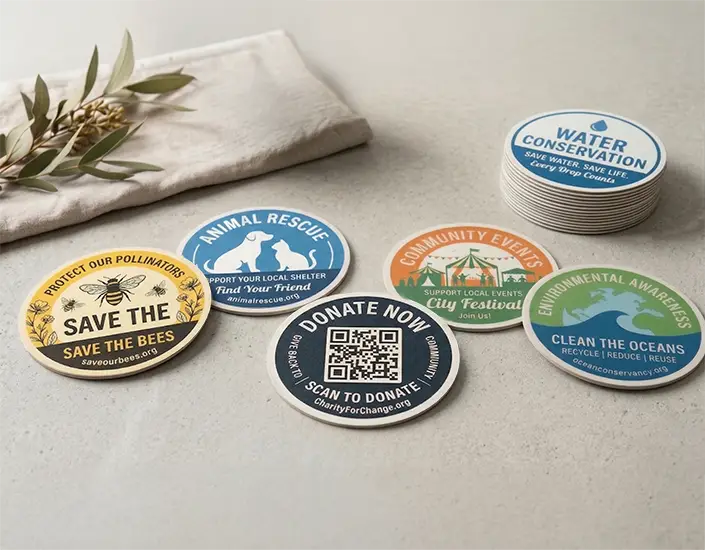
Cause marketing gifts work because they blend function with mission. A water conservation group might print "Every Drop Counts" on reusable bottles. An animal shelter could feature rescue photos on coasters. The item itself supports the message.
Quality matters more than quantity. One sturdy coaster that lasts months outperforms ten cheap trinkets that break immediately. Choose items that reflect your organization's values and professionalism.
Why Tangible Giveaways Outperform Many Media
People often handle useful objects repeatedly. Industry research shows promotional products commonly generate strong advertiser recall among recipients.
In contrast, digital impressions disappear quickly. A coaster remains on a table for the entire meal, extending exposure.
Brand visibility happens naturally when items serve real functions. A coffee mug sits on desks during work hours. A tote bag travels through grocery stores. A coaster catches eyes at every sip. These repeated exposures help build familiarity without feeling intrusive.
Physical items create emotional connections. When someone receives a thoughtful donor retention gift, they feel valued. This tangible appreciation often translates into continued support. A simple coaster becomes a daily reminder of their impact.
Research confirms promotional products generate more impressions per dollar than many traditional media. While a radio ad plays for seconds, a coaster might stay visible for weeks. The math favors tangible items for organizations watching every penny.
Supporters also share physical items more readily. A unique coaster design might end up in social media photos. A clever tote bag starts conversations at the farmer's market. Each interaction spreads your message organically.
Choosing the Right Item: Daily Use Meets Budget Discipline
Confirm the item solves a real-world problem. Does it hold a drink, carry groceries, or jot notes? Practical value supports retention.
Match materials to mission values. Choose recycled pulpboard, organic cotton, or BPA-free plastic when they align with your cause.
Plan volume tiers carefully. Higher quantities reduce unit cost and simplify inventory. A single large order costs less per piece than multiple small orders.
Affordable promotional items balance cost with quality. Pulpboard coasters offer exceptional value because they cost pennies per unit in bulk while delivering a professional presentation. They ship flat, store easily, and distribute without hassle.
Volunteer appreciation gifts require extra thought. Volunteers donate time, not just money. Recognition items should feel personal and meaningful. Custom coasters featuring volunteer names or service milestones show genuine gratitude without breaking budgets.
Consider lifecycle costs, not just purchase price. A higher-quality item that lasts years provides better value than a cheaper option that breaks immediately. Factor durability into your calculations.
Spotlight on Custom Pulpboard Coasters
Coasters deliver flat, consistent branding space and travel from event tables to home bars.
Features that make custom pulpboard coasters ideal for nonprofits:
- Absorbent European coasterboard built for repeat use.
- Full-color CMYK printing for photo-quality graphics.
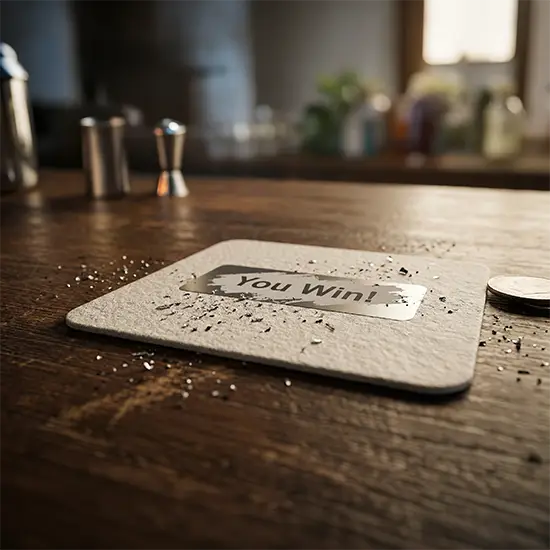
- Optional die-cuts and scratch-n-win layers for campaigns.
Custom pulpboard coasters remain our core production focus.
The material itself supports sustainability goals. Pulpboard comes from renewable wood pulp and biodegrades naturally. Vegetable-based inks reduce environmental impact further. These eco-friendly features resonate with environmentally conscious donors.
Bulk coaster printing transforms unit economics. Volume pricing makes coasters accessible even for grassroots organizations. Compare that to digital advertising, which has no lasting impact.
Design flexibility sets coasters apart. Print QR codes linking to donation pages. Feature event sponsors alongside your logo. Create limited-edition designs for special campaigns. The canvas accommodates surprising creativity.
Distribution stays simple. Stack them at registration tables. Place them on dining tables. Include them in donor mailings. Their compact size and light weight keep shipping costs minimal.
Mailer Campaigns: Your Highest-Impact Distribution Channel
For many nonprofits, direct mail campaigns drive the largest volume of promotional product orders, and for good reason. A coaster arriving in a donor's mailbox creates a tactile moment that no email newsletter can replicate.
Mailer campaigns work because they reach supporters in their homes, where decisions about giving and volunteering actually happen. When a coaster lands on the kitchen counter, it doesn't compete with a crowded inbox. It simply sits there, working quietly on your behalf.
Include a coaster in your annual giving letter, and the package immediately feels more substantial. Recipients are less likely to discard an envelope that clearly contains something.
Segmentation multiplies effectiveness. Order coasters in separate batches for distinct donor tiers or campaigns. A lapsed-donor reactivation mailer might feature different messaging than a year-end giving appeal.
Because direct mail campaigns typically require hundreds or thousands of pieces, they reach the quantity thresholds at which unit costs drop significantly.
Packaging matters for mail integrity. Pulpboard coasters ship flat and survive the postal process without warping or damage. Pair them with a matching reply card or remittance envelope to create a cohesive package that feels intentional rather than assembled from leftover supplies.
Timing mailer campaigns strategically around Giving Tuesday, year-end, or your organization's anniversary maximizes relevance. Plan artwork and proofing at least eight weeks ahead to avoid rush fees and ensure colors print accurately before your drop date locks in.
Complementary Items to Support Your Message
While Coaster Factory manufactures only pulpboard coasters, non-profits often pair them with other items to create comprehensive campaigns.
Custom tote bags extend visibility beyond events. Supporters carry them to stores, libraries, and offices. Each trip spreads awareness. Choose recycled materials to reinforce environmental missions.
Branded water bottles promote both hydration and your cause. Stainless steel options last longer and reduce plastic waste. Print your logo large enough to read from across a room.
Pens and notebooks serve practical needs at sign-up stations. Volunteers appreciate having proper tools. Include your website or donation hotline on every piece.
These items broaden reach but never replace the tabletop visibility a coaster secures. A comprehensive approach uses each item's strengths. Coasters dominate dining settings. Bottles travel to gyms. Totes visit grocery stores. Together, they surround supporters with gentle reminders.
Consider item pairings for maximum impact. A welcome kit might include a coaster set, a pen, and a notebook. An event goodie bag could include a tote and a water bottle. These bundles feel more substantial while keeping costs down.
Real-World Usage Environments
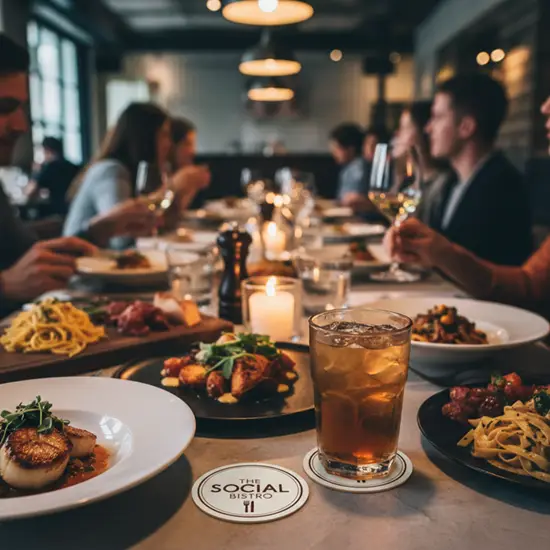
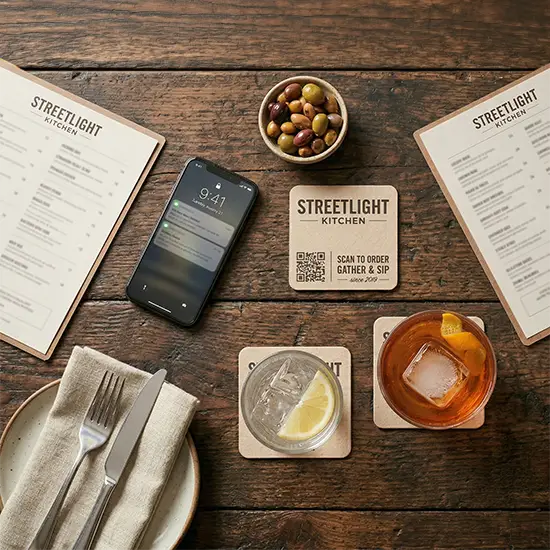
Bars and restaurants see patrons discuss the printed message while waiting for orders. Your mission becomes part of the conversation.
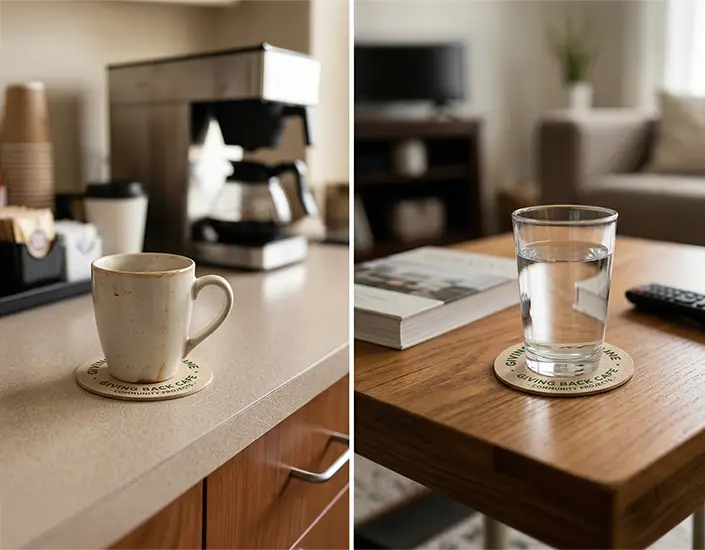
Office break rooms create repeated exposure. Staff notice the logo whenever someone refills a mug. Coasters near the coffee pot potentially receive hundreds of views each week.
Home settings transform a supporter's coffee table into a micro-billboard for your cause. Family and friends encounter your message during visits.
Event merchandise works hardest during actual gatherings. Gala tables dressed with custom coasters look professional while spreading awareness. Outdoor festivals benefit from coasters' moisture absorption during summer heat.
Nonprofit marketing tools must adapt to diverse venues. Coasters excel because they fit anywhere drinks are served. From formal dinners to casual meetups, they blend seamlessly into the environment.
Consider placement strategy. Stack extras near exits so guests take them home. Position them at information booths during community fairs. Partner with local coffee shops to distribute them with purchases. Each placement can further expand your reach at no additional cost.
Ordering Guidance for Pulpboard Coasters
Determine the event dates and work backward to allow time for proofing. Rush orders cost more and limit options.
Choose thickness based on usage. Standard weight works for casual events. Heavier stock handles extended use better. Both absorb moisture effectively.
Submit vector artwork following our artwork guidelines. Clean files print sharper and proof faster.
Approve the proof carefully, then lock in quantity tiers. Start at higher volumes for best efficiency. Smaller runs increase per-unit costs significantly.
Bulk ordering coasters requires planning but pays dividends. Calculate annual needs rather than event-by-event. A single large order might cost substantially less than multiple small orders would.
Proofing guidelines protect your investment. Check every detail at actual size. Confirm phone numbers and websites. Verify color representation within CMYK limits. Once you approve, changes become expensive.
Storage stays simple with proper planning. Coasters ship in neat boxes that stack efficiently. Keep them dry, and they last for years. This allows ordering ahead when budgets permit.
Measuring Impact Without Guesswork
Print a QR code linking to a donor page. Track scans to measure engagement directly.
Issue unique codes on each event batch to trace conversions. This reveals which venues or events generate the most response.
Survey volunteers post-event on item usefulness and brand recall. Simple feedback forms uncover what resonates.
Track promotional ROI through concrete metrics. Count new email signups at events where you distributed coasters. Monitor donation page traffic spikes after mailings. Compare volunteer retention rates before and after appreciation gifts.
Nonprofit engagement metrics extend beyond dollars. Measure social media mentions when supporters share photos of your coasters. Track how many local businesses request coasters for their venues. Count repeat volunteers who mention appreciation gifts.
Keep methods simple and sustainable. Complex tracking systems often fail under nonprofit resource constraints. Focus on one or two meaningful metrics rather than overwhelming data collection.
Connect measurement to mission. If awareness is your goal, track website visits. If fundraising is your priority, monitor donation conversions. Let your objectives guide your metrics.
Sustainability and Quality Considerations
Supporters notice material choices. Pulpboard coasters are made from renewable wood pulp and vegetable-based inks. These eco-friendly features align with environmental missions.
A higher-quality item signals respect for both donors and the environment. Thin, flimsy products suggest corner-cutting. Substantial coasters communicate professionalism.
Sustainable promotional products tell a story beyond the printed message. When materials match mission, authenticity shines through. A conservation group that uses recycled pulpboard demonstrates its commitment. A health nonprofit choosing BPA-free items shows consistency.
Quality affects retention rates. Premium pulpboard coasters survive months of regular use. Cheaper alternatives deteriorate quickly, wasting resources and undermining your message. Invest in durability to maximize environmental and financial return.
Certification matters for some audiences. Look for FSC-certified paper sources or similar credentials when they support your positioning. These details might seem minor, but can influence major donors who scrutinize every aspect of operations.
Common Mistakes and How to Avoid Them
Avoid overcrowded artwork that becomes unreadable. Keep fonts large enough for clarity.
Skip unproofed spot colors entirely. Convert to CMYK early in the design process to prevent disappointment.
Do not order minimal quantities if hosting multi-day events. Plan for extras to avoid running short.
Watch for promotional product pitfalls that waste precious resources. Ordering rush delivery doubles costs unnecessarily. Start planning eight weeks before events to use the standard turnaround.
Nonprofit branding errors often stem from enthusiasm. Trying to fit entire mission statements on a small coaster creates clutter. Choose one clear message per design. Your logo, website, and tagline are usually sufficient.
Beware bargain hunting that backfires. The cheapest supplier might use inferior materials or inconsistent printing. Poor quality reflects on your organization. Partner with established manufacturers who understand nonprofit needs.
Avoid treating promotional items as afterthoughts. Last-minute additions to event planning rarely succeed. Integrate coasters and giveaways into your overall strategy from the beginning.
Checklist: Planning Your Next Non-Profit Giveaway
- Define the objective clearly: awareness, fundraising, or volunteer thanks.
- Confirm item usefulness in daily life.
- Align materials with organizational mission.
- Set quantity based on annual needs and budget.
- Approve the proof carefully before production.
- Establish a tracking method for results.
This nonprofit promotional checklist keeps projects on track. Print it and check off items as you progress. Simple systems prevent costly oversights.
Add timeline milestones to your checklist. Note artwork deadlines, proof approval dates, and desired delivery windows. Buffer time protects against unexpected delays.
Share the checklist with your team. When everyone understands the process, collaboration improves. Volunteers can help distribute items more effectively when they know the goals.
Need clarity on quantities or artwork? Let's talk through quantities and print constraints.
FAQ
How many coasters should we order for a 200-guest gala?
Plan for sufficient units to cover table settings, bar service, and take-home extras. Guests often use multiple coasters throughout an evening. Having a surplus ensures a professional presentation without scrambling.
Can we print a unique QR code on each coaster?
Variable data printing adds cost and complexity. Most nonprofits use a single universal code per batch for simplicity. This approach still allows tracking by event or timeframe while keeping production streamlined.
What file format works best for coaster artwork?
Vector files (AI, EPS, PDF) print sharpest. They scale without quality loss and ensure crisp text. Avoid low-resolution JPEGs that look fuzzy when printed. Our artwork guidelines provide complete specifications.
How far in advance should we order?
Allow several weeks from design to delivery. This provides time for artwork creation, proof reviews, and standard production. Rush options exist but cost more. Planning ahead stretches budgets further.
Conclusion
Tangible, everyday items keep your mission present long after an event ends. Custom pulpboard coasters offer unmatched table visibility while fitting a lean budget.
Plan early, proof accurately, and track results. Each placed coaster quietly champions your cause.
Smart nonprofits recognize that mission visibility happens through repeated, gentle reminders. A coaster under every drink creates thousands of brand impressions without feeling pushy. Supporters appreciate useful items that respect their intelligence.
Branded coasters work because they solve problems while spreading awareness. They protect furniture, absorb condensation, and look professional. Your message travels along naturally, building recognition over time.
Ready to see a proof? See your artwork on a coaster today.
Share: