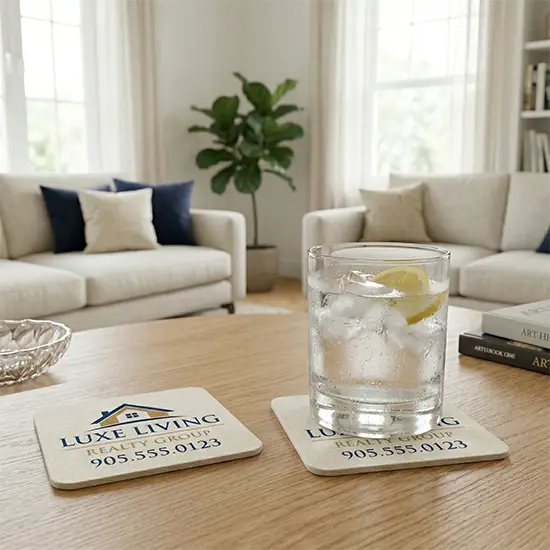
Best Drink Coaster Materials: Choosing the Right Coaster for Every Need
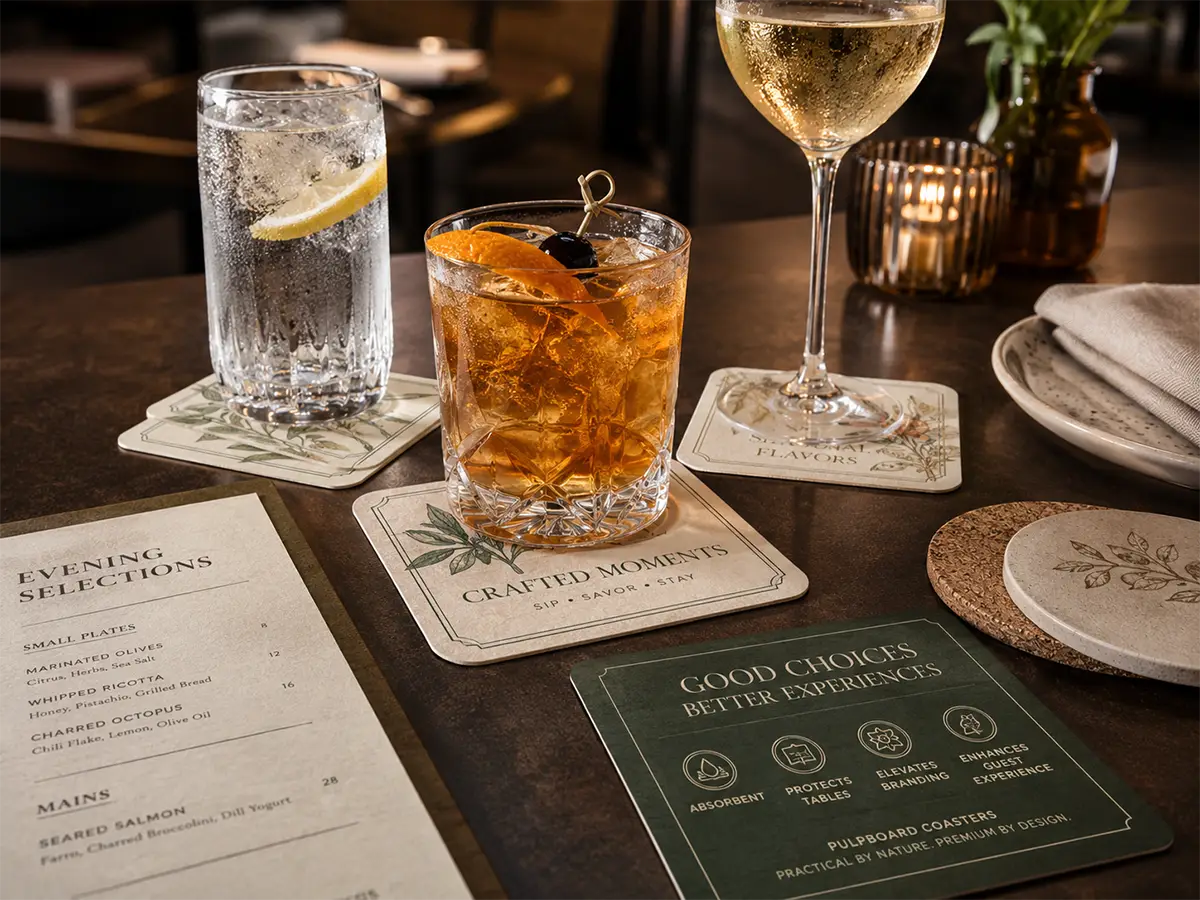
 The details are not the details. They make the design. - Charles Eames
Choosing the best drink coaster material might seem like a small decision, but in reality, it affects far more than most people realize. Coasters protect surfaces, reinforce brand perception, support sustainability goals, and quietly influence how customers experience a space. Whether you are running a busy restaurant, planning a corporate event, managing a cafe, or sourcing promotional items for clients, the material you choose matters.
Drink coasters sit at the intersection of function and presentation. They absorb moisture, prevent water rings, and create a clean visual anchor for every beverage served. At the same time, they are one of the most consistently visible printed touchpoints in hospitality and event environments. Unlike menus or signage that are glanced at briefly, coasters stay in front of customers for the entire drink experience.
This guide breaks down the best drink coaster material options available today, explaining how each performs in real-world settings. We will look at absorbency, durability, aesthetics, sustainability, and cost so you can confidently choose the best solution for your business. Along the way, we will also explore how different coaster materials align with branding, customer expectations, and operational realities.
Comparing the Best Drink Coaster Materials: Which One Works for You?
There is no single answer that fits every business. The best drink coaster material depends on how and where the coaster will be used. A high-end hotel lounge has different needs than a high-volume bar. A corporate event values different attributes than a neighborhood cafe.
Understanding how coaster materials behave under real conditions is the first step toward making the right decision. While many coaster materials exist, most hospitality and event environments rely on pulpboard as the default choice because it absorbs moisture, prints consistently, and performs reliably at scale.
Why Drink Coaster Material Matters More Than Most People Think
Coasters are often treated as an afterthought, yet they are one of the few items every guest interacts with directly. A poorly chosen drink coaster material can slide across tables, fail to absorb condensation, or clash visually with the rest of the environment. Over time, these small issues add up and subtly undermine the experience you are trying to create.
On the other hand, well-chosen drink coasters communicate care and attention to detail. They protect furniture, reduce cleanup, and reinforce a sense of professionalism. For branded environments, they also carry logos, messaging, or promotions without feeling intrusive.
Material choice influences how coasters feel in the hand, how they sound when set down, and how long they last during service. These details matter more than most people realize, especially in hospitality settings where impressions are formed quickly.
How Different Coaster Materials Perform in Real-World Use
Not all coaster materials behave the same once drinks hit the table. Some excel at absorbing moisture but wear out quickly. Other materials last for years but offer little protection against condensation. Understanding these tradeoffs is essential when evaluating the best coaster materials for your space.
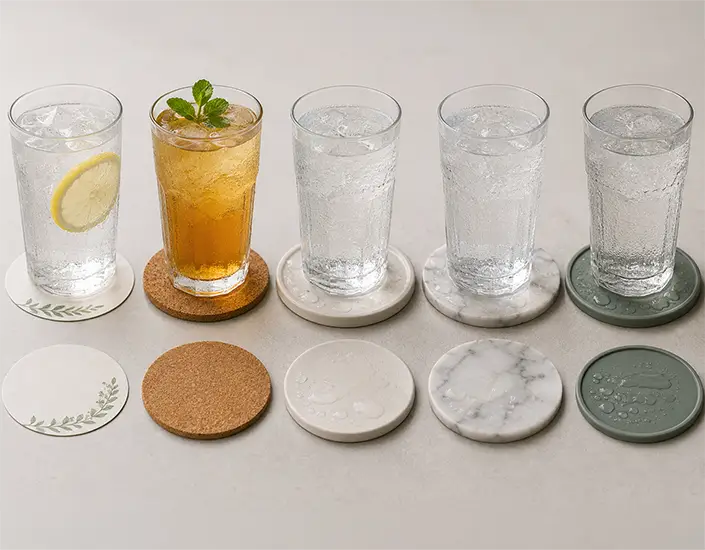
Reusable materials like ceramic coasters or marble coasters offer longevity and visual aesthetic appeal, but they often rely on a cork backing or felt base to prevent slipping and surface damage. Disposable options like paper coasters focus on absorbency and convenience, making them ideal for fast-paced environments.
Silicone coasters repel liquid instead of absorbing it, while felt coasters are often chosen for their soft texture, supporting surface protection and noise reduction when glasses are set down and creating a calmer, more refined table experience. Each material serves a different purpose, and no single option dominates across every category.
Exploring Absorbency: Which Material Best Prevents Water Rings?
Absorbency is one of the most important factors in preventing water rings on tables and bar tops. Condensation from cold drinks accumulates quickly, especially in warm or humid environments. Without an absorbent material, moisture pools and eventually spills onto surfaces.
Paper coasters are widely used because they are made from highly absorbent material designed specifically to soak up moisture. This makes them highly effective at preventing water rings during a single use. Felt coasters also offer strong absorbency, though they require cleaning and maintenance to stay effective over time.
Ceramic coasters and natural stone options like marble coasters do not absorb liquid on their own. Instead, they rely on cork backing or textured bases to trap moisture underneath the drink. Silicone coasters, while waterproof, allow condensation to collect unless designed with raised edges or channels.
If surface protection is a top priority, absorbency should weigh heavily in your decision.
Durability vs. Aesthetics: Finding the Balance in the Best Drink Coaster Material
Durability and aesthetics often pull in opposite directions. Highly durable materials tend to be heavier, less flexible, and more expensive. Lightweight and visually subtle options may need to be replaced more frequently.
Ceramic coasters and marble coasters score high on appearance and longevity but require careful handling and storage. Cork coasters strike a balance by offering moderate durability with a natural look. Paper coasters sacrifice long-term durability in favor of cost efficiency and cleanliness.
The best drink coaster material is often the one that aligns with how frequently you plan to replace it. In high-traffic environments, planned replacement is not a downside. It can actually be an advantage.
Best Drink Coaster Material for Eco-Conscious Businesses
Sustainability has become a key consideration across hospitality and corporate purchasing decisions. Eco friendly coasters help businesses reduce waste while aligning with customer values.
Paper coasters made from responsibly sourced pulpboard are widely recyclable and compostable in many regions. Cork coasters are renewable and biodegradable. Wooden coasters, when sourced responsibly, also appeal to sustainability-focused buyers.
Reusable options like silicone coasters reduce single-use waste but come with higher upfront costs and cleaning requirements. The best drink coaster material for eco-conscious businesses balances environmental impact with operational practicality.
Understanding Common Coaster Materials on the Market
With so many coaster materials available, it helps to break them down individually. Each material brings specific strengths and limitations that make it better suited to certain environments.
Ceramic Coasters: A Classic Choice for Durability and Design
Ceramic coasters are often associated with home decor styles and upscale settings. They offer a smooth, polished surface that works well with detailed artwork and full-color printing. Their weight gives them a premium feel, and they resist wear over time.
However, ceramic coasters are not naturally absorbent. Without a cork backing, they can allow moisture to pool and slide. For businesses, this means ceramic coasters are best used in controlled environments where drinks are served more slowly and presentation is prioritized.
When Ceramic Coasters Make Sense for Businesses
Ceramic coasters work well in boutique hotels, tasting rooms, and corporate gift sets. They are less suited to high-volume bars where speed and absorbency matter more than longevity. When used strategically, they elevate perceived value without sacrificing function.
Cork Coasters: Eco-Friendly, Lightweight, and Table-Safe
Cork coasters are a popular choice for businesses seeking a natural look with functional benefits. Cork is lightweight, renewable, and gentle on surfaces. It offers moderate absorbency and grips tables well, reducing slips and spills.
Cork is harvested from the bark of cork oak trees, a renewable process that allows the trees to regenerate without being cut down, which is why cork coasters are often associated with sustainable production.
Cork coasters also pair well with other materials. Many ceramic and stone coasters rely on cork backing to protect furniture and manage moisture. As a standalone material, cork offers a strong balance between sustainability and usability.
The Role of Cork Backing in Surface Protection
Cork backing is especially valuable in reusable coasters. It prevents scratches, absorbs minor condensation, and keeps coasters from sliding. Even when cork is not the primary drink coaster material, it plays a critical supporting role in performance.
Because cork comes from cork oak trees that can be harvested repeatedly over decades, cork backing offers a durable and environmentally responsible solution for protecting tables in both commercial and residential settings.
Stone and Marble Coasters: Luxury Appeal with Practical Limits
Stone coasters, including marble coasters, signal luxury and permanence. They are visually striking and durable, making them popular in upscale environments. Marble coasters, in particular, offer a timeless aesthetic appeal that complements modern and classic decor styles alike.
The tradeoff is functionality. Natural stone does not absorb moisture, and without proper backing, it can damage surfaces. These coasters are best suited for settings where appearance outweighs practicality.
Marble Coasters in High-End Hospitality Spaces
Marble coasters work best in lounges, hotel suites, and premium event settings where drinks are served slowly and tables are carefully maintained. They are not ideal for busy service environments.
Leather Coasters: Premium Feel with Specific Use Cases
Leather coasters are often chosen for their tactile quality and refined appearance rather than performance. They bring a sense of craftsmanship and warmth that works well in executive offices, lounges, and upscale hospitality environments where presentation matters.
Unlike paper or felt coasters, leather coasters are not designed to be highly absorbent. Most are treated or sealed, which means they resist liquid rather than soaking it up. As a result, they are better suited for settings where drinks are monitored and tables are cleared regularly.
From a durability standpoint, leather holds up well to handling but can show wear over time if exposed to spills or improper cleaning. A damp cloth is typically recommended for maintenance, making leather coasters more appropriate for low-volume, controlled environments.
In terms of aesthetic appeal, leather coasters pair naturally with wood, metal, and stone surfaces. Their understated look aligns with brands aiming for timeless elegance rather than bold visual statements.
Paper Coasters: Disposable, Absorbent, and Cost-Effective
Paper coasters are the workhorse of the hospitality industry. They are inexpensive, highly absorbent, and easy to replace. Made from dense pulpboard, paper coasters excel at preventing water rings and managing condensation.
Because they are disposable, paper coasters support hygiene and branding updates. They can be printed in bulk with logos, promotions, or seasonal designs. This flexibility makes them one of the best coaster materials for restaurants, bars, and events.
Why Paper Coasters Dominate Bars and Events
High-volume environments demand efficiency. Paper coasters deliver consistent performance without the need for cleaning or storage. Their absorbent material protects surfaces during peak service while supporting fast turnover.
Key Factors to Consider When Choosing the Best Coaster Material
Once you understand the basic characteristics of common coaster materials, the next step is evaluating how those traits align with your specific needs. The best drink coaster material is rarely chosen on appearance alone. Practical factors often determine whether a coaster performs well or becomes a liability during service.
Absorbency: The Key to a Clean and Dry Surface
Absorbency is often the deciding factor for businesses that serve cold drinks. Condensation forms quickly, especially in warm indoor environments or outdoor patios. Without an absorbent material, moisture spreads across the table and leaves behind water rings that are difficult to remove.
Paper coasters excel here because they are designed specifically to absorb liquid on contact. Felt coasters also perform well, though they require ongoing care to maintain effectiveness. Cork coasters offer moderate absorbency, making them a middle-ground option for lower-volume use.
Non-absorbent options like ceramic coasters, silicone coasters, and marble coasters rely on design features rather than absorption. These materials can work, but they demand careful consideration of backing and surface compatibility.
Surface Protection and Long-Term Table Care
Beyond moisture, coasters must protect tables from scratches, heat, and friction. Heavy materials like stone or ceramic can damage surfaces if they lack proper backing. This is where cork backing or felt bases become essential.
Wooden coasters also require attention. While visually appealing, they can scratch delicate finishes if not sealed or backed correctly. In commercial environments, surface protection is not optional. Replacing furniture costs far more than selecting the right drink coaster material from the start.
Materials with a soft texture, such as felt or cork, are especially effective in environments where protecting finished tables and minimizing friction are priorities.
Weight, Thickness, and Stability
A coaster that slides too easily or tips over defeats its purpose. Weight and thickness play a major role in stability. Lightweight paper coasters stay in place because they grip surfaces and absorb moisture. Heavier options rely on mass rather than friction.
Silicone coasters offer grip through texture and flexibility, while felt coasters stay put due to surface contact. Choosing the best coaster materials means considering how drinks are handled and how often tables are cleared.
Cleaning, Maintenance, and Replacement Cycles
Reusable coasters introduce cleaning into the equation. Ceramic coasters, silicone coasters, felt coasters, and wooden coasters all require regular washing or maintenance. In busy environments, this adds labor and operational complexity.
Disposable paper coasters avoid this issue entirely. They are replaced after use, ensuring consistency and cleanliness. For many businesses, planned replacement is more efficient than long-term maintenance.
Aesthetic Appeal: Choosing the Best Drink Coaster Material for Your Decor Styles
While function matters, appearance still plays a critical role. Coasters contribute to the overall visual language of a space. The best drink coaster material should complement your brand rather than compete with it.
Matching Coaster Materials to Brand Identity
Modern brands often gravitate toward minimalist designs, favoring neutral tones and subtle textures. Felt coasters, cork coasters, and paper coasters align well with this approach. Luxury brands may prefer marble coasters or ceramic coasters for their polished appearance.
Materials like cork, wood, and felt bring a sense of natural elegance that works especially well in spaces aiming for warmth, restraint, and a more organic visual identity.
Brand personality should guide material choice. A casual cafe benefits from warmth and approachability, while a corporate lounge may prioritize refinement and consistency.
Minimalist vs. Decorative Coaster Styles
Some coaster materials lend themselves to bold graphics and color, while other materials shine with restraint. Paper coasters are ideal for detailed printing and frequent design changes. Ceramic coasters handle intricate artwork well but are less flexible for updates.
Wooden coasters and natural stone options often work best with subtle branding or debossed designs. The best coaster materials are those that support your design goals without sacrificing performance.
How Custom Printing Changes Material Selection
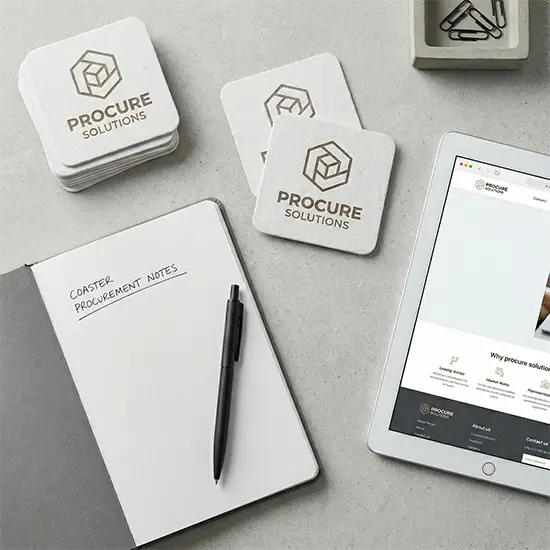
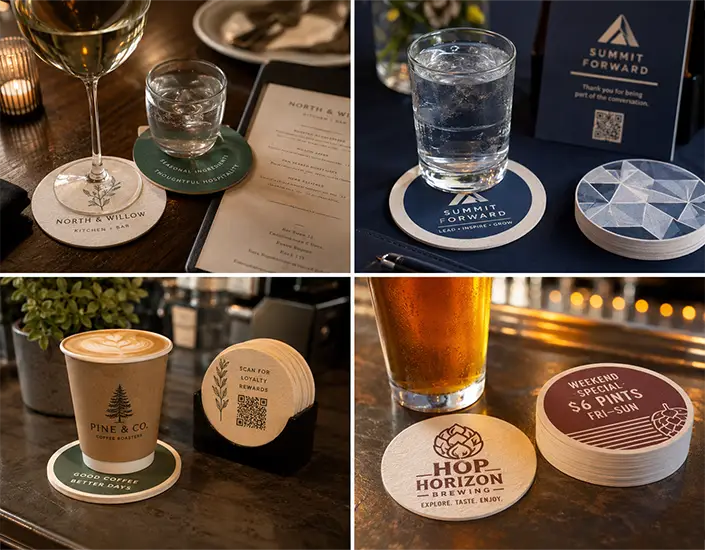
Custom printing expands the role coasters play in marketing and communication. Logos, QR codes, promotions, and event branding all influence material choice. Paper coasters remain the most versatile option for high-quality printing at scale.
Businesses looking to produce branded drink coasters often prioritize print clarity and consistency. This is where professionally produced custom coasters become a practical branding tool rather than a novelty item.
The Best Drink Coaster Material for Longevity and Durability
Durability matters, but only in context. A coaster that lasts forever is not always better than one designed for short-term use.
Short-Term vs. Long-Term Use Scenarios
Events, promotions, and seasonal campaigns benefit from disposable solutions. Paper coasters allow brands to update messaging without waste or storage concerns. Permanent environments may justify reusable options, but only if maintenance is realistic.
The best drink coaster material aligns with how often you expect to replace it.
How Commercial Environments Impact Wear
Bars, restaurants, and event venues subject coasters to spills, stacking, and frequent handling. Materials that perform well at home may fail quickly in commercial settings. This is why paper coasters remain dominant in hospitality.
Reusable options often show wear faster than expected when exposed to heavy use.
When Disposable Beats Reusable
Disposable does not mean low quality. Modern paper coasters are engineered for strength and absorbency. They deliver consistent performance without the hidden costs of cleaning and replacement schedules.
For many businesses, disposable paper coasters represent the best coaster materials from both a cost and efficiency standpoint.
Eco-Friendly Drink Coasters: Sustainable Choices for Your Business
Sustainability has moved from a bonus to a baseline expectation. Eco friendly coasters help businesses reduce environmental impact while meeting customer expectations.
The Rise of Eco-Friendly Coaster Materials
Paper coasters made from responsibly sourced pulpboard are recyclable and often compostable. Cork coasters are renewable and biodegradable. Wooden coasters appeal to sustainability-focused buyers when sourced ethically.
Reusable materials like silicone coasters reduce waste but require water and energy for cleaning. Sustainability is not just about reuse. It is about total lifecycle impact.
Many paper coasters are now produced using recycled materials, helping reduce waste while still delivering the absorbency and performance required in commercial environments.
Why Sustainability Matters in the Hospitality Industry
Customers increasingly notice sustainability choices, especially in hospitality. Small details like drink coasters signal whether a business takes environmental responsibility seriously.
Choosing eco friendly coasters is a visible, practical way to align operations with values.
Comparing Recyclable vs. Compostable Coasters
Recyclable paper coasters fit easily into existing waste streams. Compostable options work well where composting infrastructure exists. Understanding local disposal options is key to making sustainability claims meaningful.
Choosing coasters made from recycled materials can also support sustainability goals in regions where composting infrastructure is limited but recycling programs are widely available.
How to Incorporate Eco Friendly Coasters into Your Business
Start with materials that match your operations. Paper coasters are often the simplest transition. Cork coasters can support reusable programs in lower-volume environments. Clear messaging helps customers understand your choices.
Best Coaster Materials for Different Business Types
Different environments demand different solutions. Choosing the best drink coaster material means understanding how coasters are actually used.
Coasters for Restaurants: Practical, Stylish, and Functional
Restaurants prioritize absorbency, hygiene, and branding flexibility. Paper coasters meet all three needs while supporting fast service. They are the most common choice for restaurant coasters because they perform consistently during peak hours.
Why Paper and Pulpboard Excel in Restaurant Settings
Paper coasters absorb moisture, protect tables, and can be replaced instantly. They also support seasonal promotions and menu changes without additional investment.
Coasters for Corporate Events and Hospitality
Corporate environments value polish and consistency. Paper coasters work well for branded events, while ceramic coasters or felt coasters may suit executive lounges where maintenance is manageable.
Coasters for Cafes and Coffee Shops: Versatile Options
Cafes benefit from versatility. Paper coasters handle hot drinks and cold drinks well on everything from counters to the coffee table. Cork coasters add warmth to the environment. Felt coasters reduce noise and protect surfaces.
Coasters for Breweries, Bars, and High-Traffic Venues
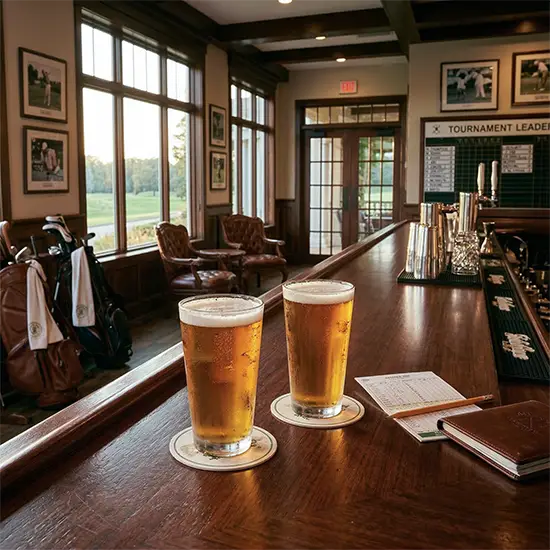
High-traffic venues demand reliability. Paper coasters remain the most practical drink coaster material for bars and breweries due to their absorbency and low cost.
Businesses serving branded drink coasters often rely on bulk production to maintain consistency across locations.
How Custom Coasters Elevate Brand Visibility
Coasters are one of the few marketing tools customers interact with repeatedly during a visit.
Why Custom Printing Changes the Value of Coasters
Custom printing turns coasters into communication tools. Logos, QR codes, and messaging reach customers without interrupting their experience. This makes coasters uniquely effective compared to signage or ads.
Design Considerations Based on Drink Coaster Material
Not all materials print equally. Paper coasters deliver the best print clarity at scale. Ceramic and stone options require different production methods and longer lead times.
Choosing Materials That Print Cleanly and Consistently
For most businesses, professionally produced drink coasters printed on highly absorbent paper provide the best balance of quality, cost, and reliability.
Conclusion: Selecting the Best Drink Coaster Material for Your Business
The best drink coaster material is not universal. It depends on your environment, your brand, and how your customers interact with your space. Absorbency, durability, aesthetics, and sustainability all play a role in the decision.
Paper coasters continue to dominate hospitality for good reason. They are highly absorbent, cost-effective, customizable, and easy to manage. Reusable options have their place, but only when their limitations are understood.
By choosing thoughtfully, coasters become more than surface protection. They become part of the experience.
Share: