Disposable Coasters: What to Know Before You Order
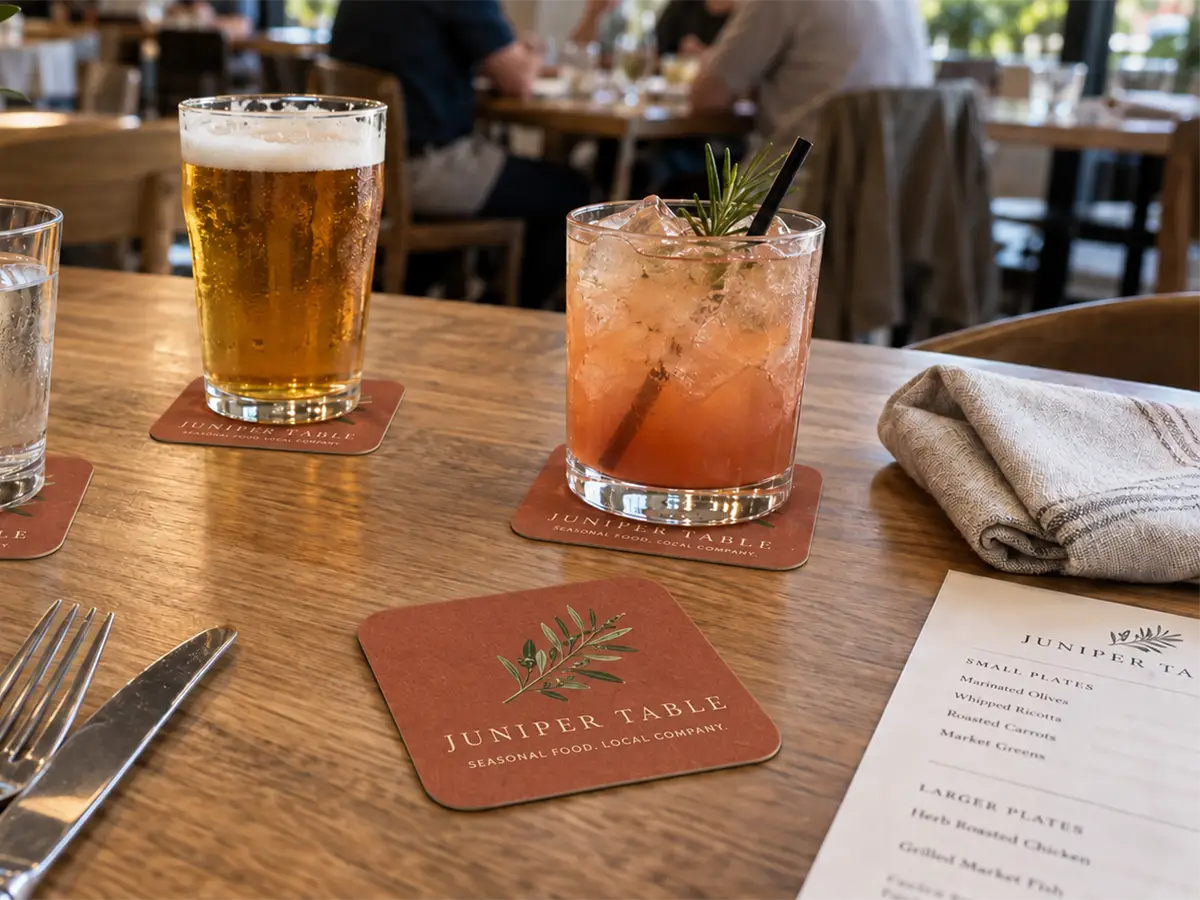
 A coaster may be small, but it can carry a brand across the whole table. - Coaster Factory
A coaster has a practical job: absorb condensation and help protect the surface beneath a drink. Add a thoughtful design, and that same space can introduce your brewery, promote an event, or put your restaurant's name in front of a guest.
When choosing disposable coasters, it helps to look beyond the artwork. The board, thickness, quantity, and print setup all affect what you receive. Your schedule also needs to allow for proof approval, production, and shipping.
This guide explains how to choose custom pulpboard coasters for bars, restaurants, hospitality venues, and events and what to prepare before placing an order.
What Are Disposable Coasters?
Disposable coasters are intended for convenient replacement after short-term use. In hospitality, the term commonly describes paper-based coasters placed under drinks and replaced as needed during service.
That does not mean every coaster becomes unusable after one drink. A well-made pulpboard coaster may remain useful through several drinks or be taken home as a keepsake. Its condition depends on moisture exposure, handling, and the board itself. Venues can set their own replacement practices and remove coasters when they become soiled, damaged, or overly wet.
For buyers, the important distinction is between a coaster made to absorb condensation and a piece of printed paper that simply looks the part.
Why Pulpboard Works for Drinks and Branding
Pulpboard coasters use absorbent paper-based board made for drink-coaster applications. The material provides a firm surface beneath the glass while taking up moisture from condensation.
Material names can be confusing. Products described as "paper coasters" or "cardboard coasters" may use different stocks and finishes. Ask about the actual board rather than assuming that every paper-based product performs the same way. A coated or laminated surface can behave differently from absorbent coaster board.
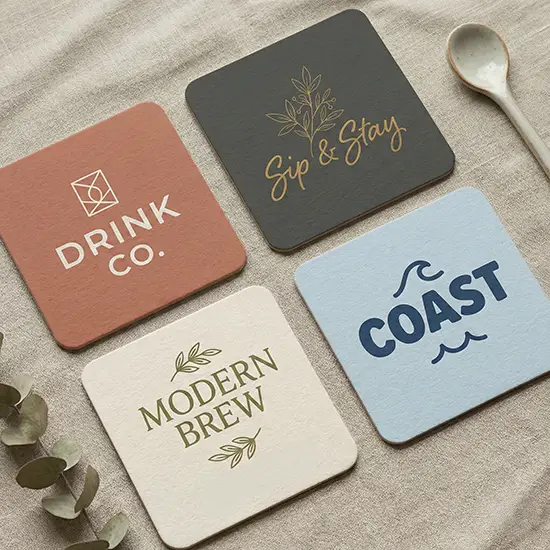
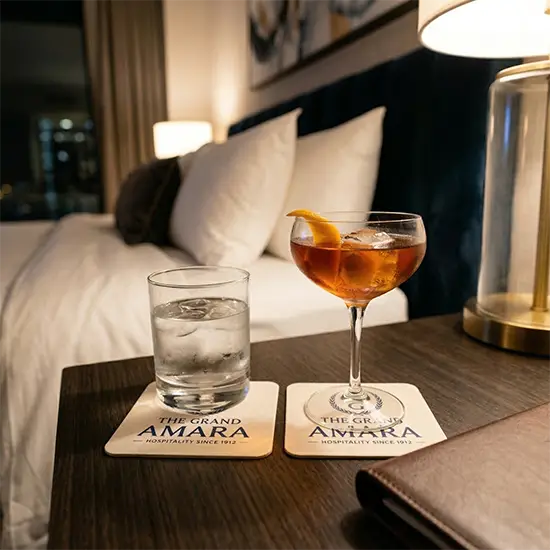
Printed pulpboard also gives your message a place at the table. A brewery can feature a seasonal release, a restaurant can introduce its new identity, and an event organiser can give sponsors a useful piece of printed promotion.
Keep the design focused. A recognisable logo, clear contrast, and a short message are easier to read than a crowded layout. If you include a QR code, leave clear space around it and test it at the intended printed size. Use a destination that will remain useful throughout the coaster's circulation.
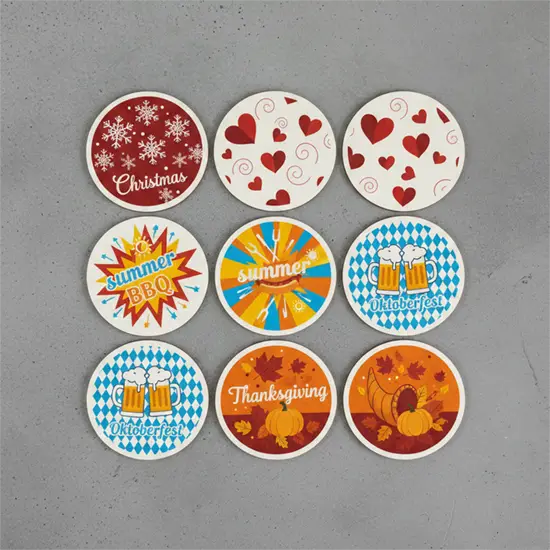
Printing on both sides can give the design more flexibility. Put the main branding on one side and an event detail, offer, illustration, or conversation starter on the reverse. Consider what a guest can see while a drink is in place and what they will discover when they pick up the coaster.
How Do Disposable Coaster Materials Compare?
Disposable coasters can be made from different materials, so it helps to look beyond the general label and check the actual product details. Stock, thickness, coating, absorbency, and intended use all affect how a coaster performs on the table.
Pulpboard Versus Thin Paper or Cardboard
Pulpboard is a practical choice for disposable drink coasters because it is made to absorb condensation while still providing a printable surface for branding, artwork, QR codes, and event messaging. At Coaster Factory, our coasters are made from recycled pulpboard and are 100% biodegradable and eco-friendly.
Terms such as "paper coaster" or "cardboard coaster" can be used in different ways, so they do not always describe the same product. A thin paper coaster may not have the same structure, thickness, or absorbency as a pressed pulpboard coaster. On the other hand, "cardboard" is sometimes used loosely to describe several paper-based materials. The better question is what stock is being used, how thick it is, whether it has a coating, and whether it is designed for beverage service.
Foam and Synthetic Disposable Coasters
Some disposable coasters may use foam or synthetic materials, but buyers should check the specific material before comparing performance or disposal options. These products may be chosen for certain uses, but they do not offer the same paper-based feel as pulpboard and may have different environmental considerations.
If disposal impact matters to your business or event, review the actual material description instead of relying on a broad "disposable" label.
Disposable Versus Reusable Coasters
Reusable coasters such as cork, wood, ceramic, silicone, leather, or stone can work well for homes, retail sets, and long-term table use. They are usually purchased, cleaned, stored, and reused rather than replaced regularly.
Disposable pulpboard coasters serve a different purpose. They are useful for restaurants, bars, breweries, events, hotels, tastings, promotions, and giveaways where branding, cleanliness, and easy replacement matter. They can also be used for more than one drink when they remain in good condition, so "disposable" does not mean the coaster becomes unusable after a single glass.
Choosing Thickness, Size, and Shape
Choose a Thickness That Fits the Job
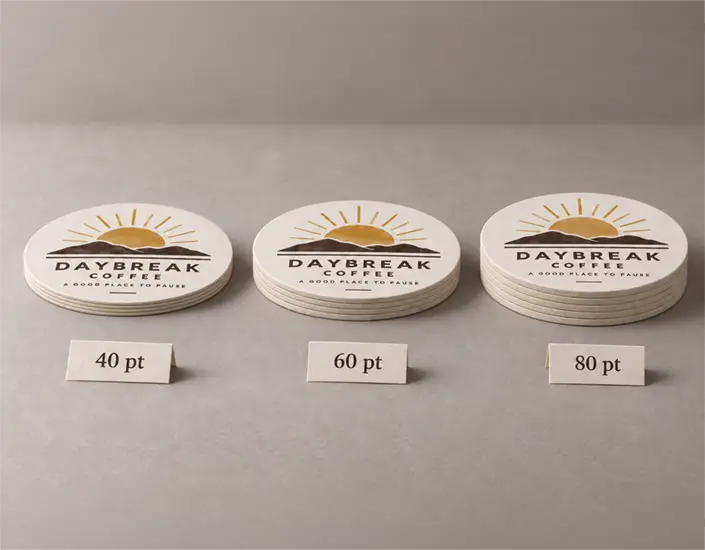
Coaster Factory offers 40 pt, 60 pt, and 80 pt pulpboard on applicable order options. Thickness affects the coaster's feel and can influence how much moisture it handles. The right choice also depends on budget, expected use, and the impression you want the finished piece to make.
40 pt pulpboard is the lightweight option, suited to projects where a lighter board fits the application and budget. 60 pt pulpboard offers a mediumweight feel with more substance for everyday service or promotions. 80 pt pulpboard is the heavyweight option, worth considering when you want a more substantial feel for the finished design or intended use.
There is no single thickness that every bar, meeting room, or outdoor event must use. Think about the drinks being served, expected moisture, handling, and how often coasters will be replaced. If you are unsure, ask about samples so you can compare the board in person.
Thickness availability depends on the product you choose. Short Run coasters use 80 pt board; Value Pack orders offer 40 pt, 60 pt, and 80 pt options.
Check the Size Against Your Glassware
Common standard sizes include 3.5-inch and 4-inch coasters in round and square shapes. Check the base of the glasses or cups you plan to use, then consider how much artwork will remain visible around them.
A larger coaster may provide more room for your message, but the layout still needs breathing space. Keep important text away from the cut edge and use the correct template for the selected size and shape.
Use Shape to Support the Design
Round and square coasters suit a wide range of branding. A custom shape can connect the printed piece more closely to a campaign, such as a house silhouette for a real estate promotion or a ticket shape for an event.
The coaster still needs a usable area for the drink. Discuss dimensions and artwork placement before finalising a custom outline, and confirm any effect on pricing and production timing.
How Many Coasters Should You Order?
For regular service, start with actual usage where possible. Track how many coasters your team puts out over a representative week, including replacements. Then decide how many weeks of stock you want to hold.
For example, a venue using 500 coasters each week would need 4,000 for eight weeks. Adding a 10% planning buffer brings the estimate to 4,400. That buffer is an example, not a fixed requirement; adjust it for busy periods, events, and storage space, then choose an available order quantity that covers your needs.
For an event, consider attendance, the number of service areas, replacement needs, and whether guests are likely to take coasters home. One coaster per attendee may not cover an event with several bars or multiple sessions.
Bulk ordering can reduce the unit price, but the largest order is not always the best fit. Balance the saving against storage, cash flow, and the useful life of the artwork. A dated event design needs a different stock plan from a year-round logo coaster.
Set your reorder point early enough to cover usage during artwork review, production, and shipping, plus a practical buffer. Store unused stock in a clean, dry location.
Match Your Quantity to an Order Option
Short Run coasters are available in quantities of 25-500 on 80 pt pulpboard. This option suits smaller events, limited promotions, or a small batch of branded coasters.
For regular hospitality use and larger promotional orders, value pack coasters are available in quantities of 1,200-25,000, with 40 pt, 60 pt, or 80 pt pulpboard options. Choose the thickness that fits your application and the feel you want.
For higher volumes or custom requirements, discuss your project through our bulk coasters. A tailored quote can confirm the quantity and board options for your order. If your quantity falls between the listed ranges, ask which option best fits your project.
Preparing Artwork and Approving Your Proof
Start With the Correct Artwork Specifications
Use the template and file requirements for your chosen order option. The specifications for Value Pack and High Volume orders are separate from the Short Run guidance.
For Value Pack and High Volume artwork, the current file specifications call for:
- Raster images at 300 dpi or higher at actual printed size.
- CMYK colour rather than RGB.
- At least 1/4 inch of bleed beyond the cut edge for backgrounds or images that reach the edge.
- A 3/16-inch safe area inside the cut edge for important text and artwork.
- Text converted to outlines, or the required fonts supplied with the artwork.
Use vector logos where available and keep placed images at sufficient resolution. Changing a low-resolution image's dpi setting alone will not restore missing detail.
Bleed extends the design beyond the trim line to accommodate cutting variation. The safe area keeps important content comfortably inside that line. Both matter, particularly for borders, small text, and custom shapes.
Check spelling, contact details, dates, website addresses, and QR destinations before submitting. If the coaster has two different sides, label the files clearly so the front and reverse are easy to identify.
Understand What the Digital Proof Shows
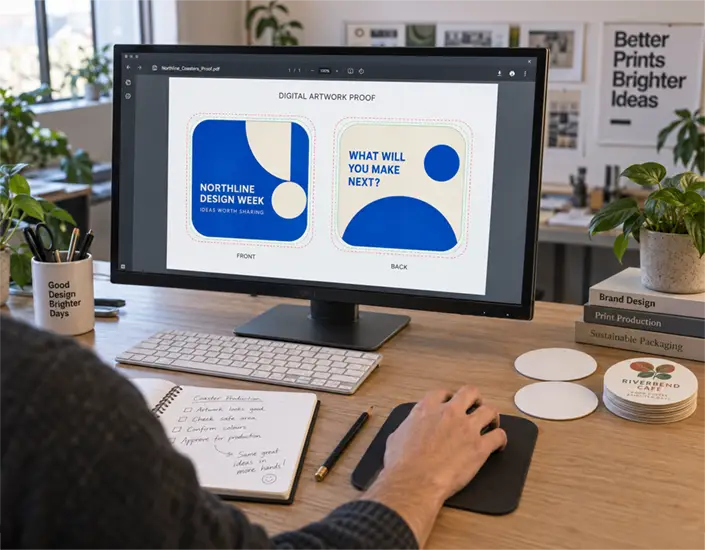
A digital proof lets you review the artwork and layout before production. Check the wording, placement, orientation, and both sides of the design where applicable.
A digital proof is not a physical sample printed on the selected board. It cannot show the actual texture or guarantee that screen colour will match the finished coaster. Screens display colour differently from printed materials, and the board and print process affect the result.
If matching a brand colour or an existing printed item is important, raise that before approval. For applicable orders, supply the target PMS reference or ask about providing a printed reference. Confirm what colour-matching options are available for your project.
Short Run coasters are digitally printed and have a slight sheen; Value Pack coasters are offset printed with a matte appearance. When the finish matters to your decision, ask about samples rather than judging it from a screen.
Planning Production and Delivery
Work backwards from the date the coasters need to arrive. Allow time for artwork preparation, proof review, production after approval, and shipping to the destination.
Typical production windows are 3-5 business days after approval for Short Run orders and 10-15 business days after approval for Value Pack orders. These are production estimates, not delivery dates. Confirm the current schedule for your selected product, particularly for larger quantities or custom requirements.
If you have a fixed event date, share it at the start. Ask whether any rush option is available for your order and confirm the shipping plan before relying on it.
Ordering from a nearby supplier does not automatically mean an earlier arrival. Compare the complete schedule, including proof approval and transit, rather than distance alone.
Frequently Asked Questions
Can Pulpboard Coasters Be Reused?
They can be reused when they remain clean and in suitable condition. Moisture exposure and handling affect their useful life. For hospitality service, follow your venue's replacement practices and remove coasters that are soiled, damaged, or overly wet.
Are Disposable Coasters Recyclable?
Check the finished product and your local collection requirements. Paper-based construction alone does not tell you whether a particular used coaster belongs in your recycling bin. Ask about the selected board and print finish, and confirm acceptance with your local program.
Can I Use Different Designs on the Front and Back?
Yes, Coaster Factory offers double-sided printing, and the two sides can carry different artwork. Confirm the printing configuration for the product you select and review both sides carefully during proof approval.
Can Coasters Be Used as Event Giveaways?
Yes. A coaster can serve as a useful event piece and a take-home reminder. Consider a design that guests will want to keep, such as an illustration, event identity, or collectible series. Keep essential details readable and avoid crowding the artwork.
Can I See the Material Before Ordering?
Ask Coaster Factory about product samples to compare the board, thickness, and printed finish. A sample helps you evaluate the physical product; it is separate from the digital proof used to review your own artwork.
Choose Your Custom Coasters
Start with your quantity, preferred size and shape, thickness, and required arrival date. Have your artwork ready if available, and tell us whether you need printing on one or both sides.
Browse our custom coasters to choose an order option, or request a quote for your project. We can help you confirm the specifications and production details before you proceed.
Share: